
Book Appointment Now
Sciatica Relief with Auricular Acupuncture: Natural Treatment Options That Work
Sciatica can be excruciating, frustrating, and disruptive to daily activities. Simple tasks like walking, sitting, bending, driving, or sleeping can become challenging when sciatic nerve pain arises. While traditional treatments often aim to reduce inflammation and alleviate symptoms, sciatica treatment through auricular acupuncture offers a comprehensive approach by addressing both the pain and the underlying imbalances that contribute to the condition.
At Spark of Life Acupuncture in Cape Town, we implement a holistic strategy that merges Traditional Chinese Medicine principles, acupuncture therapy, lifestyle advice, and supportive care. This combination is designed to alleviate pain, restore mobility, and promote long-term healing.
Understanding Sciatica: What You Need to Know
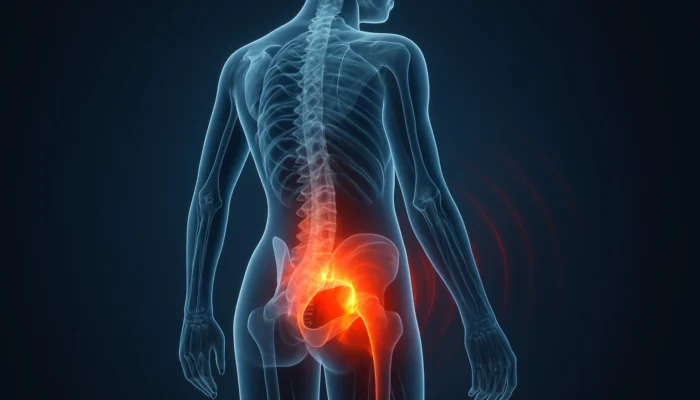
Sciatica is not a standalone condition but rather a symptom stemming from irritation, compression, or inflammation of the sciatic nerve, which is the longest nerve in the human body.
The sciatic nerve originates from the lower spine and extends through the buttocks and down each leg. When this nerve is compressed or irritated, pain can radiate along its pathway.
Sciatica may manifest on one side of the body or, in rare cases, affect both sides simultaneously.
Identifying Common Causes of Sciatica
Sciatica occurs when pressure or irritation impacts the nerve roots in the lower back.
Common causes include:
1. Herniated or Bulging Disc
A spinal disc may protrude and exert pressure on nearby nerves, leading to pain.
2. Degenerative Disc Disease
Age-related changes can diminish the cushioning between vertebrae, resulting in discomfort.
3. Spinal Stenosis
Narrowing of the spinal canal can compress nerves, contributing to sciatic pain.
4. Piriformis Syndrome
Tightness or spasms in the piriformis muscle located in the buttock may irritate the sciatic nerve.
5. Muscle Imbalances and Poor Posture
Extended periods of sitting combined with weak core muscles can lead to increased strain on the back.
6. Pregnancy
Changes in posture and pelvic pressure during pregnancy may lead to sciatic symptoms.
7. Trauma or Injury
Falls, lifting injuries, and repetitive strain can trigger inflammation contributing to sciatica.
Recognizing Symptoms of Sciatica
Symptoms of sciatica can range from mild discomfort to intense nerve pain and may include:
- Lower back pain
- Pain radiating through the buttock and down the leg
- Burning sensations or feelings similar to electric shocks
- Tingling or sensations of pins and needles
- Numbness in the leg or foot
- Muscle weakness
- Difficulty standing or walking
- Increased pain after prolonged periods of sitting
Seek immediate medical attention if sciatica is accompanied by loss of bladder or bowel control, rapidly worsening weakness, severe trauma, or numbness in the groin area.
How Traditional Chinese Medicine Views Sciatica
In Traditional Chinese Medicine (TCM), sciatica is not merely considered a compressed nerve.
Pain is often seen as a disruption in the smooth flow of Qi (vital energy) and Blood throughout the body’s meridian system.
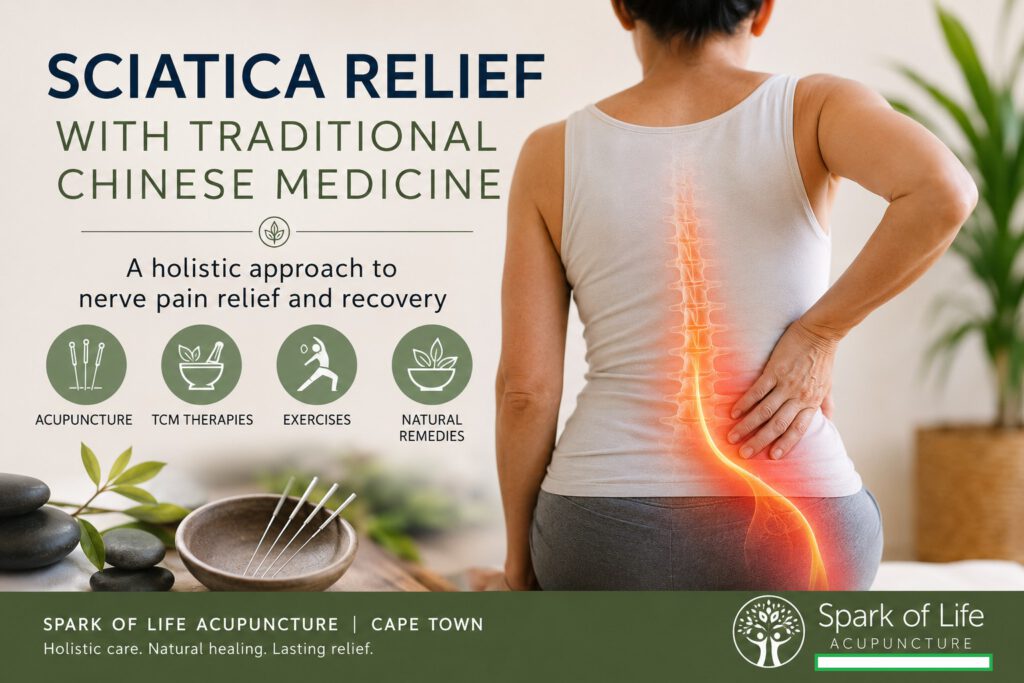
Common TCM patterns associated with sciatica include:
Qi and Blood Stagnation
This pattern is often linked to injuries, tension, or chronic inflammation.
Cold-Damp Obstruction
Pain may feel heavy and stiff, often improving with warmth.
Damp-Heat Accumulation
This pattern is associated with inflammation, swelling, and burning sensations.
Kidney Deficiency
In TCM, kidney energy plays a crucial role in supporting the lower back and maintaining structural integrity.
Treatment aims to restore circulation, alleviate stagnation, nourish deficiencies, and bolster the body’s natural healing capabilities.
Effective Acupuncture Strategies for Sciatica at Spark of Life
At Spark of Life Acupuncture, we tailor treatment plans to address both symptoms and the underlying causes of sciatica.
Your auricular acupuncture session may include:
Auricular (Ear) Acupuncture
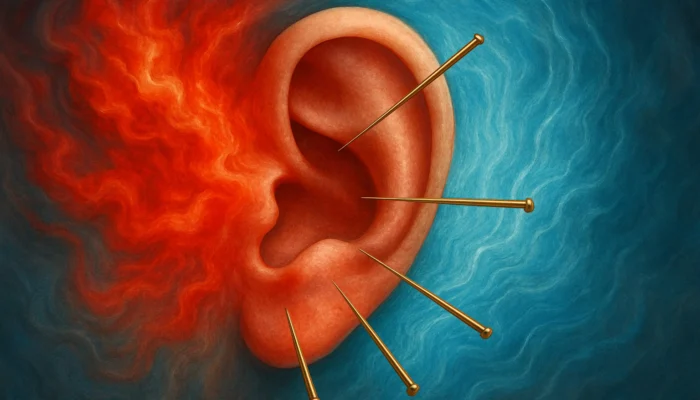
Sterile needles are carefully placed to stimulate specific ear points that enhance circulation, relieve muscular tension, promote relaxation, and assist in pain management.
Comprehensive TCM Assessment
Treatment is guided by a holistic evaluation of symptoms, posture, lifestyle, stress levels, sleep patterns, and overall constitution.
Guidance for Lifestyle and Recovery
Recommendations may encompass movement, stretching, heat therapy, and supportive self-care practices.
Many clients incorporate acupuncture as part of a broader pain management and recovery strategy.

Gentle Exercises for Sciatica Relief
Movement should remain gentle and comfortable to avoid aggravating symptoms.
Knee-to-Chest Stretch
Lie on your back and gently pull one knee towards your chest.
Piriformis Stretch
Cross one ankle over the opposite knee and gently stretch the hip area.
Pelvic Tilts
These help strengthen and mobilize the lower back.
Cat–Cow Stretch
This exercise encourages gentle spinal movement.
Walking
Engaging in short walks can enhance circulation and alleviate stiffness.
Avoid aggressive stretching or pushing through severe discomfort.
Natural Remedies That May Enhance Recovery
The following approaches may complement professional care:
- Warm compresses or heat packs
- Gentle movement throughout the day
- Staying well-hydrated
- Following anti-inflammatory dietary patterns
- Practicing stress reduction techniques
- Engaging in mindful breathing exercises
- Optimizing sleep quality
- Maintaining proper posture
Strategies for Preventing Sciatica
While not all cases of sciatica can be prevented, adopting these habits may help reduce the likelihood of recurrence:
- Strengthen core muscles
- Engage in regular physical activity
- Avoid prolonged sitting
- Use proper lifting techniques
- Incorporate stretching into your routine
- Maintain healthy body mechanics
- Manage stress and muscle tension
- Seek prompt treatment for recurring symptoms
Why Spark of Life Acupuncture Stands Out
At Spark of Life, we understand that pain impacts more than just the physical body; it affects sleep, work, mood, mobility, and overall quality of life.
Our comprehensive approach includes:
✓ Personalized assessments
✓ Auricular acupuncture techniques
✓ Holistic support for recovery and well-being
✓ Gentle, individualized care
✓ Practical self-care strategies
Whether your symptoms are recent or longstanding, our treatment focuses on enhancing comfort, mobility, and overall well-being.
Ready to explore a natural method for sciatica support?
Contact Spark of Life Acupuncture in Cape Town to schedule your consultation.
Frequently Asked Questions (FAQ) About Sciatica
Can acupuncture effectively alleviate sciatica symptoms?
Studies indicate that acupuncture may assist some individuals in managing pain related to sciatica and enhance functionality. Individual responses can vary, making it essential to consult a qualified practitioner for guidance.
How many acupuncture sessions are recommended for sciatica treatment?
The number of auricular acupuncture sessions required for sciatica treatment depends on factors such as duration, severity, and underlying causes. Acute cases typically respond more quickly than chronic conditions.
Is sciatica a permanent condition?
Many cases improve significantly with appropriate management, physical movement, and treatment.
What activities should I avoid if I have sciatica?
Avoid prolonged sitting, sudden heavy lifting, and movements that significantly exacerbate pain.
Can walking worsen my sciatica?
Gentle walking is generally beneficial, but excessive activity during flare-ups may worsen symptoms.
Should I use heat or ice for sciatica relief?
Many individuals find heat to be beneficial for muscle tightness, while ice may provide relief after acute irritation. Responses can vary from person to person.
References for Further Reading
American Academy of Orthopaedic Surgeons (AAOS). Sciatica and lumbar nerve conditions.
National Institute for Health and Care Excellence (NICE). Guidelines on Low Back Pain and Sciatica.
World Health Organization (WHO). Benchmarks for Traditional, Complementary, and Integrative Medicine.
National Center for Complementary and Integrative Health (NCCIH). Acupuncture: An In-Depth Overview.
Vickers AJ et al. Acupuncture for chronic pain: An individual patient data meta-analysis.
Zhang R et al. Mechanisms of acupuncture in pain modulation. (NIH)
Schedule your appointment with Spark of Life Acupuncture and explore a holistic path toward recovery from sciatic pain.


This is such an important topic to address, especially since sciatica can significantly alter one’s daily routine and overall quality of life. I can relate to the challenges you described—sometimes even the simplest movements become daunting. I’ve heard about auricular acupuncture before, but your insights into how it targets the underlying imbalances alongside the pain management really provide a fresh perspective.
The exploration of sciatica and its treatment options, particularly through auricular acupuncture, touches on a crucial aspect of holistic health that often gets overshadowed by conventional approaches. Your description of how debilitating sciatica can be resonates deeply with those of us who have navigated its challenges. The pain is not merely a symptom but a barrier to so many of life’s joyous, simple tasks.
You’ve captured the essence of living with sciatica so well. The pain radiates far beyond the physical; it drags down our mood and interrupts the simple pleasures in our daily lives. Many don’t fully grasp how debilitating this condition can be until they experience it firsthand. It’s a constant reminder of what we might take for granted—whether it’s bending down to tie our shoes, enjoying a day at the park, or even just sitting comfortably for a meal with loved ones.
You’ve really hit the nail on the head with your thoughts about sciatica and how it can overshadow so much of our daily lives. It’s interesting to see how often we focus on conventional treatments without diving into alternatives that have been around for ages and can provide real relief. Sciatica isn’t just about discomfort; it’s like a shadow that follows you around, affecting everything from the way you move to how you feel mentally and emotionally.
The insights you’ve offered about sciatica and the potential benefits of auricular acupuncture resonate deeply with what I’ve seen in my own experience. Living with persistent sciatic nerve pain can indeed be debilitating, often impacting not just physical activities but overall mental well-being as well. It’s refreshing to see a treatment approach that goes beyond merely masking symptoms to tackle the root causes.
Your insights into sciatica and its complexities resonate deeply, especially for those of us who have experienced its disruptive effects firsthand. The pain can turn even the simplest daily activities into formidable challenges, as you mentioned. I remember a phase in my life when I struggled to find a comfortable position to sleep, which added to my overall distress.
Your exploration of sciatica and its treatments through auricular acupuncture resonates deeply with many who grapple with the condition. The multifaceted nature of sciatica, as you mentioned, highlights the importance of understanding not just the symptoms, but the underlying imbalances contributing to the discomfort. It’s intriguing that you emphasize a holistic approach, integrating Traditional Chinese Medicine (TCM) principles alongside acupuncture therapy and lifestyle modifications. This comprehensive strategy acknowledges the complex interplay between physical pain, emotional well-being, and lifestyle factors.
I find it intriguing that you highlight auricular acupuncture as a treatment for sciatica, especially given the increasing interest in holistic approaches to pain management. While traditional methods often prioritize symptom reduction, it’s essential to consider the underlying causes of conditions like sciatica. I’ve personally experienced the frustrating cycle of temporary relief followed by a return to discomfort, which makes a comprehensive strategy even more appealing.
It’s interesting to see a focus on auricular acupuncture for sciatica, particularly since traditional methods often aim at merely addressing symptoms rather than tackling root causes. I’ve had relatives who struggled with similar pain, and while they found temporary relief with common treatments like physiotherapy or medication, the persistent nature of sciatica made it evident that a holistic approach might be more effective.
It’s fascinating to see how holistic approaches like auricular acupuncture can provide relief for conditions such as sciatica. I’ve often found that our modern lifestyle, with its constant sitting and stress, can exacerbate these issues. It’s refreshing to read about a treatment that not only targets the pain but also considers the root causes and overall health. Integrative therapies remind me of how many cultures have long understood the importance of balance and harmony in healing. Do you think incorporating mindfulness practices could further enhance the relief and recovery process for those dealing with sciatica? It would be intriguing to hear other readers’ experiences with blending different wellness strategies alongside traditional treatments.
It’s interesting to see a focus on auricular acupuncture in addressing sciatica. I’ve experienced firsthand how disheartening it can be when simple activities become burdensome due to nerve pain. Traditional treatments often provide temporary relief, but I appreciate how a holistic approach can promote long-term healing by addressing root causes rather than just symptoms.
It’s fascinating how a condition like sciatica can ripple through every aspect of our lives, turning even mundane activities into significant challenges. The insights you’ve shared about auricular acupuncture and its holistic approach resonate with many who seek alternatives to traditional pain management strategies.
It’s so true that conditions like sciatica can cast a long shadow over day-to-day life. One moment, you’re going about your routine, and the next, simple activities—like picking something up from the floor or sitting for too long—can feel daunting. This ripple effect can really change how we interact with our surroundings and even the people in our lives.
Your exploration of sciatica and the potential of auricular acupuncture as a treatment method resonates deeply, especially considering how debilitating sciatic nerve pain can be for so many individuals. It’s striking to think about how a condition that affects something as fundamental as movement can drastically alter our day-to-day lives, impacting not only physical activity but also emotional well-being and social engagement.
It’s fascinating how sciatica, often misunderstood as just “back pain,” really reflects deeper issues within our bodies. I’ve experienced the challenges that come with this condition—simple tasks became daunting, impacting my whole routine. Exploring auricular acupuncture as part of treatment sounds intriguing! It’s a reminder that holistic approaches can often bridge the gap between symptom relief and understanding the underlying causes.
Your post sheds light on the often-overlooked complexities of sciatica and the innovative approaches to treatment that go beyond mere symptom relief. It’s so true that the debilitating nature of sciatica can extend well beyond physical pain, affecting our daily lives, friendships, and even mental health.
It’s truly enlightening to see more discussion around the complexities of sciatica and the transformative potential of auricular acupuncture! I can relate to the frustrations that come with persistent pain. For a few years, I wrestled with sciatic discomfort that seemed to flare up unpredictably, often derailing my plans and impacting my overall well-being. Like many, I initially relied on conventional treatments, but I was left seeking a bit more holistic understanding of my body and its signals.
It sounds like you’ve been on quite the rollercoaster ride with sciatic discomfort—one that feels less like an amusement park thrill and more like a bumpy drive down the world’s worst road. That on-again-off-again pain can definitely be a party crasher for life’s more enjoyable moments, right? I often think of sciatica like that unexpected dinner guest who shows up uninvited and lingers way too long.
I really appreciate how you’ve highlighted the holistic approach to treating sciatica through auricular acupuncture. It’s fascinating to think about how interconnected our body systems are and how addressing the root causes can lead to better outcomes than just masking the symptoms. A friend of mine had a similar experience; she struggled with sciatica for years but found significant relief after incorporating acupuncture into her routine. It changed her approach to managing discomfort—she even started to prioritize her overall wellness, like nutrition and yoga.
Ah, sciatica—it’s like that unwelcome party crasher who not only shows up uninvited but also decides to take over the couch and hog all the snacks. I’ve had my fair share of painful moments courtesy of this pesky nerve, and I can wholeheartedly relate to the struggle of just trying to sit comfortably without planning an elaborate escape route.
It’s interesting to see how holistic approaches like auricular acupuncture are gaining recognition in managing conditions such as sciatica, which can certainly disrupt daily life. I personally believed for a long time that conventional treatments were the only way to approach chronic pain. However, after experiencing my own struggles with back pain, I began exploring alternative therapies and found that they often address not just the symptoms, but the root causes as well.
This approach to treating sciatica through auricular acupuncture is intriguing, especially given the challenges often faced with traditional methods. It’s essential to note that many patients are understandably skeptical about alternatives like acupuncture due to limited immediate relief with conventional therapies.
I genuinely appreciate your exploration of sciatica and the innovative approach you shared through auricular acupuncture. It’s fascinating to see how traditional therapies are being integrated with modern health strategies to enhance well-being. Having struggled with similar nerve pain in the past, I can fully relate to how debilitating sciatica can be. The simple act of sitting or bending over can feel like a monumental challenge, which is often overlooked by those who haven’t experienced it.
Ah, sciatica—the uninvited guest that crashes the party and makes sitting on the couch feel like a competitive sport. I can totally relate! Just the other day, I found myself avoiding a simple trip down to the kitchen because I was convinced my sciatic nerve had teamed up with my hip flexors to keep me on the couch, binge-watching yet another season of “The Office”. Who knew that a harmless trip for snacks could turn into a tactical operation worthy of a military strategy meeting?
I hear you loud and clear. Sciatica really does have a knack for ruining simple pleasures. It’s wild how something that starts as a minor tweak in your back can spiral into a full-on tactical operation just to reach the fridge. I can picture you eyeing that kitchen like it’s a high-stakes battlefield, pre-planning the route, and plotting escape strategies like you’re about to infiltrate an enemy base just for a bag of chips.