
Book Appointment Now
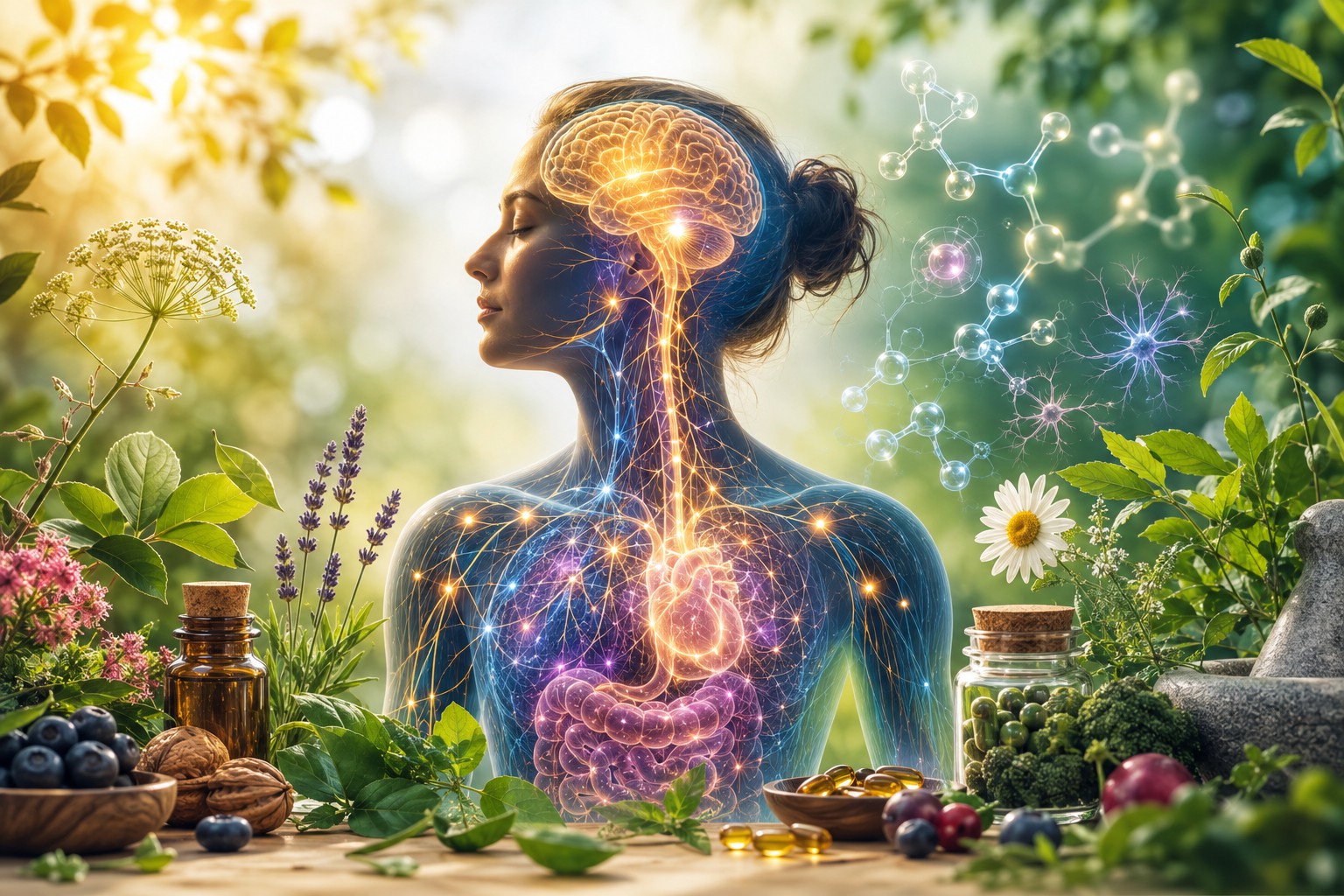
Your Body’s Internal Pharmacy: Natural Healing Systems Explained
Your Body’s Internal Pharmacy: How Your Brain and Body Produce Their Own Natural Pharmacy Medicine
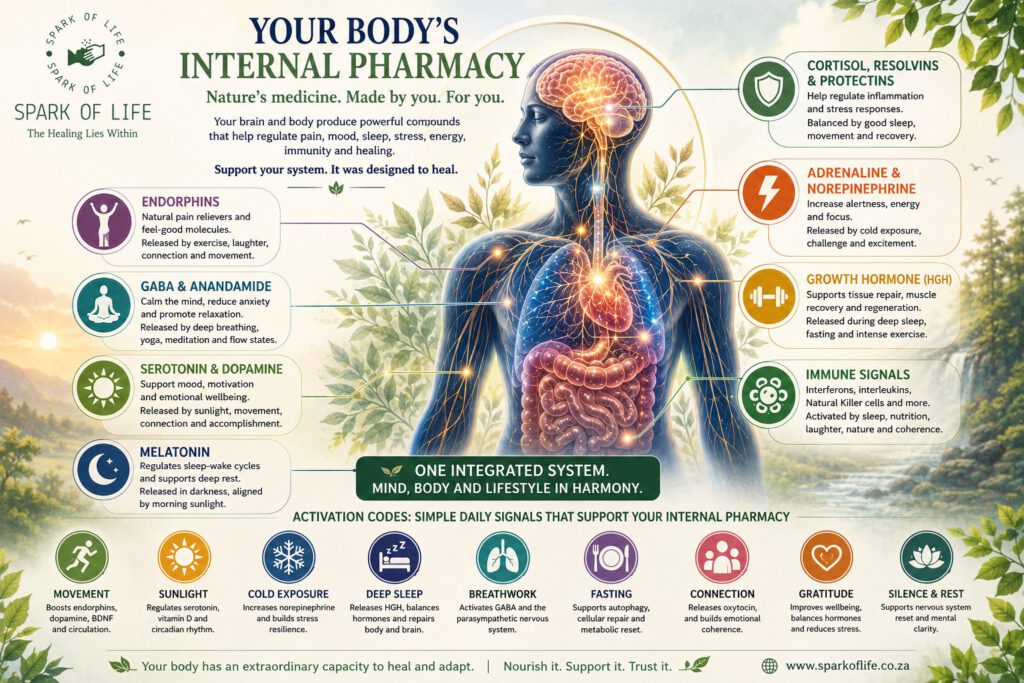
Your body contains an extraordinary biological pharmacy. It produces neurotransmitters, hormones, neuropeptides, immune signalling molecules and other compounds that help regulate pain, mood, sleep, stress, energy, inflammation, immunity and tissue repair.
Unlike the image of a pharmacy on the high street, this internal pharmacy does not consist of shelves of tablets and bottles. It is a dynamic network involving your brain, nervous system, endocrine system, immune system, gut and virtually every other part of your body.
And there is something particularly interesting about it:
Your everyday behaviours can influence how these systems function.
Movement, sleep, daylight, relaxation, meaningful social connection, nutritious food, breathing practices and other healthy behaviours can all interact with the body’s regulatory systems.
This does not mean that pharmaceutical medicines are unnecessary or that every illness can be treated naturally. Modern medicine is enormously valuable, and medicines can be life-saving.
It does, however, mean that we should not overlook the remarkable capacity of the human body to regulate itself.
At Spark Of Life, this understanding forms part of a broader approach to wellbeing: supporting the body’s nervous system, encouraging healthy lifestyle patterns and helping people create conditions in which their natural regulatory systems can function effectively.
The human body has endogenous systems that resemble or interact with some of the same biological pathways targeted by medicines, and lifestyle can influence those systems.
What Does “Your Internal Pharmacy” Actually Mean?
The phrase “internal pharmacy” is a useful way of describing the body’s ability to manufacture and regulate biologically active substances.
Your nervous and endocrine systems continuously produce chemical messengers that influence how you feel and function.
These include:
- Endorphins and other endogenous opioids
- GABA
- Serotonin
- Dopamine
- Endocannabinoids such as anandamide
- Melatonin
- Cortisol
- Adrenaline and noradrenaline
- Growth hormone
- Oxytocin
- Numerous immune signalling molecules
- Brain-derived neurotrophic factor (BDNF)
These substances do not work independently. They form part of highly complex networks in which one system influences another.
For example, sleep affects hormones and immune function. Exercise affects neurotransmitters and BDNF. Stress influences the autonomic nervous system and cortisol. Social interaction can influence oxytocin and reward pathways.
In other words, your body is constantly communicating with itself.
The goal of healthy living is not necessarily to “boost” one particular chemical. It is to support the balance and adaptability of the systems that regulate the whole person.
1. Endorphins: Your Natural Pain-Modulating System
Perhaps the best-known example of the body’s internal pharmacy is the endorphin system.
Endorphins are part of a larger group of naturally occurring opioid peptides known as endogenous opioids. These include beta-endorphin, enkephalins and dynorphins.
They interact with opioid receptors involved in pain perception, stress responses, reward and other physiological processes.
This is one reason exercise can sometimes produce a feeling of wellbeing or reduced perception of discomfort.
However, the popular claim that endorphins are simply “20 times stronger than morphine” is misleading. Different substances act differently at different receptors, and potency depends on the specific biological context.
The important point is much more interesting:
Your body possesses its own sophisticated pain-modulating system.
Exercise, emotional experiences and certain forms of stress can influence endogenous opioid activity.
This does not mean you should ignore persistent or severe pain. Pain is an important biological signal, and unexplained pain should be appropriately assessed.
2. GABA: One of the Brain’s Important Braking Systems
If the nervous system had an accelerator and a braking system, GABA (gamma-aminobutyric acid) would be one of the major components of the braking system.
GABA is the principal inhibitory neurotransmitter in the brain and plays an important role in controlling neuronal excitability.
The GABA system is also involved in the regulation of anxiety. In fact, benzodiazepine medicines used for certain anxiety disorders work partly by enhancing GABAergic signalling.
This does not mean that simply taking a deep breath produces a pharmaceutical dose of GABA.
Rather, practices such as slow breathing, relaxation, meditation and yoga may influence autonomic regulation and the overall balance between arousal and relaxation.
This is an important distinction.
The body is not a machine with an “on/off” switch. It is a constantly adapting network.
3. Serotonin and Dopamine: More Than “Happy Chemicals”
Serotonin and dopamine are often described in popular health articles as “happiness chemicals”.
The reality is considerably more sophisticated.
Serotonin
Serotonin is involved in numerous physiological processes, including:
- Mood regulation
- Sleep
- Appetite
- Gastrointestinal function
- Pain processing
- Neurodevelopment
Serotonin is not simply a substance that makes you happy.
Importantly, the old idea that depression is simply caused by “low serotonin” is not supported by current evidence. A major umbrella review found no convincing evidence that depression can be explained simply by reduced serotonin activity.
This does not mean serotonin is irrelevant to depression or that antidepressant medicines do not work for some people.
It means that human mood and mental health are much more complicated than a single chemical imbalance.
Dopamine
Dopamine is similarly misunderstood.
It plays important roles in:
- Motivation
- Reward
- Learning
- Movement
- Attention
- Behavioural reinforcement
Healthy activities that provide challenge, achievement, learning and meaningful reward can engage these systems.
That is one reason why doing something difficult and meaningful can feel different from simply receiving passive entertainment.
4. Anandamide: The Endocannabinoid Connection
Your body also produces its own cannabinoids.
One of these is anandamide, an endocannabinoid involved in processes including pain, mood, appetite and stress regulation.
The word anandamide comes from ananda, a Sanskrit word associated with bliss.
Exercise has been investigated in relation to the endocannabinoid system, and research suggests that endocannabinoids may contribute to some aspects of the exercise-related “runner’s high”.
This helps explain why movement can affect mood in ways that go beyond simply burning calories.
The lesson is not that exercise is a replacement for medical treatment.
It is that movement is a powerful biological stimulus.
5. Melatonin: Your Body’s Biological Night Signal
The pineal gland produces melatonin, a hormone strongly associated with the body’s circadian rhythm.
Melatonin production normally increases during the biological night and is suppressed by light.
This is why light exposure is so important to sleep.
Morning light helps synchronise the circadian system, while exposure to bright light at inappropriate times — particularly late in the evening — can shift circadian timing.
Recent research continues to demonstrate the importance of appropriately timed morning light for regulating circadian rhythms.
This leads to a simple but powerful lifestyle principle:
Your morning can influence your night.
Getting outside and receiving natural daylight after waking can be one part of a healthy circadian routine.
Good sleep hygiene also involves consistent sleep and wake times, a suitable sleep environment and reducing unnecessary bright-light exposure close to bedtime.
6. Cortisol: Not the “Bad” Stress Hormone
Cortisol has developed an unfortunate reputation.
It is often described simply as the “stress hormone”.
But cortisol is essential for life.
It helps regulate:
- Blood glucose
- Metabolism
- Blood pressure
- Immune activity
- The body’s response to stress
- Circadian rhythms
The problem is not cortisol itself.
The problem can arise when stress responses become excessive, prolonged or poorly regulated.
Healthy cortisol follows a daily rhythm rather than remaining permanently elevated.
This is one reason why supporting sleep, recovery, physical activity and stress regulation is important.
The aim should not be to eliminate cortisol.
The aim is healthy regulation.
7. Your Body’s Natural Anti-Inflammatory Systems
Inflammation is another area where the internal pharmacy metaphor becomes particularly interesting.
Inflammation is not inherently harmful.
It is an essential part of the body’s defence and repair systems.
Problems arise when inflammatory processes become excessive, prolonged or poorly resolved.
The body has its own mechanisms for resolving inflammation, including specialised lipid mediators such as resolvins and protectins.
These molecules are part of an active biological process involved in the resolution of inflammation.
Lifestyle factors — especially sleep, physical activity, nutrition and stress regulation — can influence inflammatory pathways.
But again, there is no single “anti-inflammatory switch”.
The body uses an interconnected network of systems.
8. Adrenaline and Noradrenaline: Your Built-In Energy System
Your adrenal glands and nervous system produce adrenaline (epinephrine) and noradrenaline (norepinephrine).
These chemicals help prepare the body for action.
They can:
- Increase alertness
- Increase heart rate
- Mobilise energy
- Increase blood flow to muscles
- Improve readiness for action
This is extremely useful when you need to respond quickly.
The problem comes when the stress-response system is repeatedly activated without sufficient recovery.
This is why modern wellbeing is not simply about reducing stress.
It is about developing resilience and recovery.
Exercise provides a useful example.
Physical activity deliberately challenges the body. The body then adapts.
The goal is not to avoid all physiological stress.
It is to develop the ability to respond, recover and adapt.
9. Growth Hormone and Deep Sleep
Growth hormone is produced primarily by the pituitary gland and is released in pulses.
One important period of growth hormone secretion occurs during sleep, particularly around the early part of the sleep period and in association with slow-wave sleep.
Growth hormone is involved in:
- Growth during childhood
- Tissue repair
- Protein synthesis
- Metabolism
- Body composition
This is another reason why sleep should not be regarded simply as “downtime”.
Sleep is active biology.
During sleep, the body and brain undergo extensive processes associated with recovery, regulation and maintenance.
Instead of searching constantly for another supplement or stimulant, one of the first questions to ask is:
Am I giving my body enough opportunity to recover?
10. Exercise and BDNF: Supporting the Brain
One of the particularly interesting molecules associated with brain health is brain-derived neurotrophic factor (BDNF).
BDNF supports neuronal survival, growth, plasticity and learning.
Research has found that exercise can increase BDNF levels, with both acute exercise and regular training influencing BDNF-related responses.
This provides another reason to view physical activity as something more than a method of controlling body weight.
Exercise is also a form of brain stimulation.
Walking, resistance training, cardiovascular exercise, dancing, swimming and other forms of movement can all provide physiological and psychological benefits.
The best exercise is often the exercise you can perform consistently.
11. Your Immune System Has Its Own Communication Network
The immune system is not simply an army waiting to attack infections.
It is a sophisticated communication and surveillance network involving:
- White blood cells
- Cytokines
- Interferons
- Natural killer cells
- Antibodies
- Complement proteins
- Innate and adaptive immune responses
Sleep plays an important role in immune regulation.
So does nutrition.
So does physical activity.
And psychological stress can also influence immune function.
This is one of the reasons why “wellness” should not be reduced to one isolated treatment.
The body works as an interconnected system.
12. What About Fasting and Autophagy?
Fasting has become increasingly popular because of research into autophagy — a cellular recycling process through which cells break down and reuse components.
Research suggests that fasting and nutrient deprivation can activate pathways associated with autophagy, including AMPK and mTOR signalling.
However, much of the strongest mechanistic evidence comes from laboratory and animal research, and the precise effects of different fasting patterns in humans are still being investigated.
Fasting is therefore not a magic “detox switch”.
It is also not appropriate for everyone.
Pregnant or breastfeeding people, children, people with certain medical conditions and people taking particular medicines may need to avoid fasting or undertake it only with appropriate professional guidance.
The broader principle is more useful:
Your metabolism is adaptable.
How, when and what you eat can influence metabolic signalling and energy regulation.
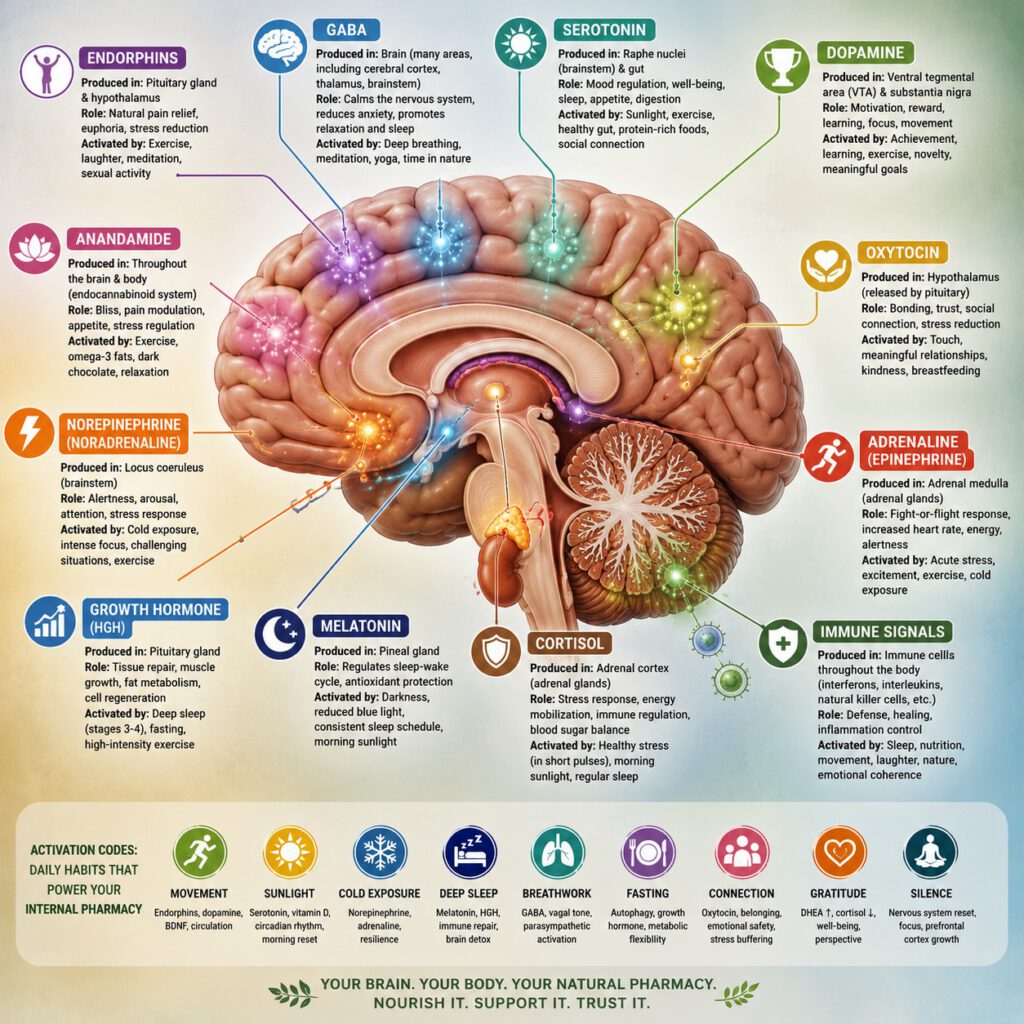
So, Can You Really “Activate Your Internal Pharmacy”?
Yes — but not in the simplistic way . There is no button that says:
“Press here to release serotonin.”
And there is no single lifestyle practice that releases every beneficial molecule simultaneously.
Instead, your body responds continuously to environmental and behavioural signals.
The human body has endogenous systems that resemble or interact with some of the same biological pathways targeted by medicines, and lifestyle can influence those systems.
Think of it less as activating a pharmacy and more as creating the biological conditions in which your regulatory systems can work well.
Some of the most useful signals include:
Move your body
Regular physical activity influences cardiovascular health, metabolism, brain function, mood and neuroplasticity. Exercise can also influence endogenous opioids and BDNF.
Get natural daylight
Morning light helps synchronise the circadian system and can support healthier sleep timing.
Protect your sleep
Sleep is essential for hormonal, neurological, metabolic and immune regulation.
Breathe slowly and deliberately
Slow breathing and relaxation practices can help shift autonomic activity towards a calmer physiological state.
Build meaningful relationships
Human beings are social organisms. Connection, belonging and supportive relationships are important components of psychological wellbeing.
Challenge yourself physically
Appropriate exercise creates a controlled physiological challenge followed by adaptation and recovery.
Eat nourishing food
The nervous system, endocrine system and immune system all require adequate nutrients to function properly.
Create periods of recovery
Constant stimulation is not the same thing as productivity.
The nervous system also needs opportunities to settle.
Be in gratitude
Having an attitude of gratitude has been said to increase DHEA by up to 100% and decrease cortisol by as much as 23%.
Where Does Acupuncture Fit Into the Internal Pharmacy?
This is where the idea becomes particularly interesting for an acupuncture practice.
Acupuncture does not need to be presented as a treatment that “injects” chemicals into the body.
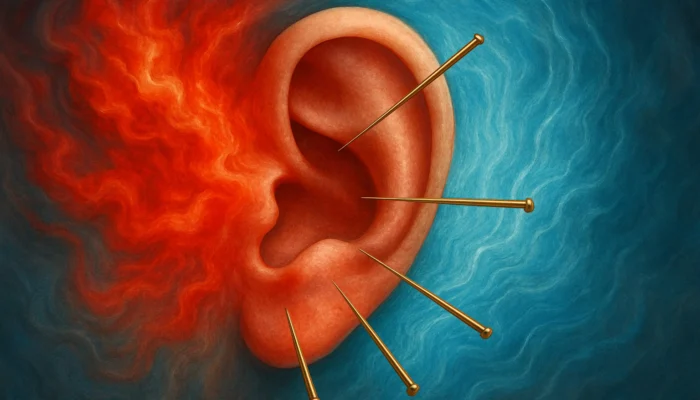
Instead, acupuncture provides a physiological stimulus that may interact with the nervous system, pain-processing pathways and autonomic regulation.
Research suggests that acupuncture may help with several pain conditions, including some forms of back and neck pain, osteoarthritis-related knee pain and postoperative pain.
There is also research investigating acupuncture in relation to anxiety and stress, although the evidence is more variable and further high-quality research is needed.
This is an important distinction.
Acupuncture should not be presented as a replacement for necessary medical care.
Rather, it can form part of an integrated approach to wellbeing for appropriately selected people.
At Spark Of Life, acupuncture and related wellness approaches are used within a broader philosophy that recognises the importance of the nervous system, lifestyle, emotional wellbeing and healthy daily habits.
Your Internal Pharmacy Is Not a Replacement for Modern Medicine
The “internal pharmacy” analogy becomes dangerous if it is interpreted to mean that medicines are unnecessary.
They are not.
Pharmaceutical medicines can be extraordinarily effective and can save lives.
Insulin, antibiotics, anaesthetics, blood-pressure medicines, anticoagulants, asthma medicines and many other treatments have transformed healthcare. In general, a pharmaceutical drug is a synthetic copy of a molecule your body already makes. Suggesting that every drug is a crude imitation.
Nor are naturally produced substances automatically safer than medicines. Only under the correct circumstances, would these have zero side effects, create perfect dosing, in an infinite supply.
A substance produced by the body can have powerful effects. Likewise, a pharmaceutical medicine may be carefully studied, dosed and monitored for a specific purpose.
The goal should not be:
Natural versus pharmaceutical.
A more useful question is:
How can we use the best available evidence to support the whole person?
That means combining appropriate medical care with healthy lifestyle choices and, where appropriate, complementary approaches.
The Real “Activation Codes” Are Surprisingly Ordinary
There is something almost disappointing about the real science.
The body’s most powerful signals are not always exotic.
They often come from things we already know we should be doing.
Move.
Sleep.
Get daylight.
Eat well.
Breathe.
Connect.
Recover.
Learn.
Laugh.
Spend time outdoors.
Give your nervous system periods of calm.
None of these is a miracle cure.
But together they provide repeated signals to the biological systems responsible for maintaining health and resilience.
And that may be the most valuable lesson of the internal pharmacy metaphor.
Your Body Is Designed to Adapt
Your body is not a passive container that waits for something to be done to it.
It is constantly responding to what happens around and within you.
Your brain responds to movement.
Your hormones respond to sleep and light.
Your nervous system responds to breathing and perceived safety.
Your immune system responds to infection, nutrition, stress and recovery.
Your muscles respond to exercise.
Your circadian system responds to light and darkness.
Your cardiovascular system responds to physical demand.
Your brain responds to learning and experience.
This capacity to respond and adapt is one of the defining characteristics of living biology.
So perhaps the most useful way to think about your “internal pharmacy” is this:
You already possess remarkable biological systems for regulation, adaptation and recovery. Your lifestyle provides many of the signals that help determine how those systems respond.
The objective is not to avoid medicine.
It is not to promise that natural approaches can cure every condition.
And it is not to chase a particular “happy chemical”.
It is to understand your biology better — and make daily choices that support it.
Your body has an extraordinary capacity for self-regulation. Give it the right conditions, and you may be surprised by what it can do.
Frequently Asked Questions
What is the body’s internal pharmacy?
The “internal pharmacy” is a metaphor for the body’s ability to produce and regulate biologically active substances such as neurotransmitters, hormones, endogenous opioids and immune signalling molecules. These substances help regulate pain, mood, sleep, stress, metabolism and immune function.
Does the brain really produce natural painkillers?
Yes. The body produces endogenous opioid peptides, including beta-endorphins, enkephalins and dynorphins. These interact with opioid receptors and participate in the body’s natural pain-modulation systems.
Are endorphins stronger than morphine?
It is misleading to make a simple statement that endorphins are “20 times stronger than morphine”. Different opioid molecules have different receptor affinities, concentrations and biological effects. The scientifically supported point is that endogenous opioids are an important component of the body’s own pain-regulation system.
Does exercise release endorphins?
Exercise can influence endogenous opioid activity and other neurochemical systems. It can also affect BDNF and other pathways associated with brain health and wellbeing.
Does the body produce its own melatonin?
Yes. The pineal gland produces melatonin, particularly during the biological night. Light is a major regulator of melatonin and circadian timing.
Does morning sunlight help sleep?
Morning light is an important signal for synchronising the circadian system. Appropriate morning light exposure can help regulate the timing of the body’s biological clock and melatonin rhythm.
Is depression caused by low serotonin?
Depression is much more complex than a simple serotonin deficiency. Current evidence does not support the idea that depression can generally be explained as simply having “too little serotonin”.
Can lifestyle changes replace antidepressants or other medication?
Not necessarily. Lifestyle interventions can support overall health and may improve wellbeing, but they should not automatically replace prescribed treatment. Anyone considering changing or stopping medication should discuss this with their doctor or other appropriate healthcare professional.
Can acupuncture activate the body’s natural healing systems?
Acupuncture provides a physiological stimulus that interacts with the nervous system and other biological pathways. Research suggests it may be helpful for certain pain conditions, while evidence for conditions such as anxiety is more variable.
Is natural treatment always safer than medication?
No. “Natural” does not automatically mean safe, just as “pharmaceutical” does not automatically mean harmful. Safety depends on the substance, dose, individual circumstances, interactions and quality of evidence.
What is the best way to support my body’s natural systems?
Start with fundamentals: regular movement, adequate sleep, natural daylight, nutritious food, meaningful social connection, stress management and sufficient recovery. Individual health conditions may require additional medical care.
References
- National Center for Complementary and Integrative Health (NCCIH). Acupuncture: Effectiveness and Safety.
- National Center for Complementary and Integrative Health (NCCIH). Anxiety and Complementary Health Approaches: What the Science Says.
- National Center for Complementary and Integrative Health (NCCIH). 7 Things To Know About Complementary Health Approaches for Anxiety.
- Chaudhry, S. R. & Rahimi, N. Biochemistry, Endorphin. StatPearls / NCBI Bookshelf, updated 2025.
- Akil, H. et al. Endogenous and Exogenous Opioids in Pain. Cold Spring Harbor Perspectives in Medicine.
- Moncrieff, J. et al. The serotonin theory of depression: a systematic umbrella review of the evidence. Molecular Psychiatry.
- Kalueff, A. V. & Tuohimaa, P. Anxiety disorders and GABA neurotransmission: a disturbance of modulation. Psychopharmacology / PMC.
- Szuhany, K. L., Bugatti, M. & Otto, M. W. A meta-analytic review of the effects of exercise on brain-derived neurotrophic factor.
- Czeisler-related circadian research and recent review literature. Can Morning Light Phase Advance Human Melatonin Rhythms in Less Than 24 h? Journal of Pineal Research, 2026.
- The Impact of Sleep and Circadian Disturbance on Hormones and Metabolism.
- Sleep in Normal Aging: Sleep-Related Hormones, Aging and Sleep.
- A Narrative Review about Metabolic Pathways, Molecular Mechanisms and Clinical Implications of Intermittent Fasting as Autophagy Promotor.
This exploration of our body’s internal pharmacy resonates deeply, particularly in light of the growing interest in holistic health practices. It’s fascinating to consider how intricate and responsive our biological systems are, especially when we recognize that our behaviors and lifestyle choices play such a pivotal role in regulating our internal processes.
It’s interesting how you mention our body’s internal pharmacy and the intricate interplay of our biological systems. I’ve been diving deeper into holistic health practices myself lately, and it’s wild to see how much influence our everyday choices have on our wellbeing. For instance, I’ve become more mindful about nutrition and how specific foods can impact not just physical health but mental clarity and emotional balance as well.
This concept of our bodies as an internal pharmacy really resonates with me. It’s fascinating to think about how much control we have over our well-being through everyday choices. For instance, I’ve noticed that when I make a conscious effort to stay active and eat well, my mood lifts significantly. It’s almost like I can feel those neurotransmitters kicking in!
This concept of our body as an internal pharmacy resonates deeply with me, especially in light of the growing interest in holistic health practices. I’ve personally experienced how simple lifestyle changes, such as integrating regular movement and mindfulness into my daily routine, can significantly enhance my mood and overall well-being. For instance, I’ve found that even a short daily walk in nature can improve my mental clarity and reduce stress levels, illustrating the profound connection between our environment, physical activity, and mental health.
Your exploration of the body as an internal pharmacy truly resonates with me, especially the way you emphasize the impact of our everyday behaviors. I’ve recently begun to embrace mindfulness practices and have noticed a significant shift in my overall well-being. It’s fascinating how something as simple as deep breathing or a walk in nature can influence our neurochemistry and create ripples of positive change throughout the body.
Your exploration of the body’s internal pharmacy raises fascinating points about the interplay between our biology and lifestyle choices. It’s intriguing to consider how everyday behaviors, like movement and social connections, can actively influence the production of neurotransmitters and hormones, impacting our overall health and well-being.
I love the idea of our bodies being like their own internal pharmacies—it’s such a powerful way to think about health and wellness. It’s fascinating how interconnected everything is! I’ve been diving into this whole concept of biohacking lately, trying to optimize my daily habits to support those natural systems. For instance, I’ve started prioritizing morning light exposure, which has not only helped with my sleep but also my overall mood.
This exploration of the body’s internal pharmacy resonates deeply with me, particularly when considering the profound impact everyday behaviors have on our overall health and well-being. The intricate interplay between our brain, nervous system, and various bodily systems is a testament to the remarkable adaptability and resilience of our biology.
Ah, the body’s internal pharmacy—who knew we were all walking around with our own little apothecary tucked away inside? It’s quite the twist on the old “the doctor is in” concept, isn’t it? Instead of a white coat and a stethoscope, we’ve got neurotransmitters and neuropeptides working diligently behind the scenes, delivering their own unique prescriptions. I can’t help but picture tiny pharmacists scurrying around in lab coats inside my cranium, checking off lists of hormones like they’re working on a very exclusive cocktail menu.
This concept of our bodies functioning as an internal pharmacy really resonates with me. It’s fascinating to think about how our daily choices—like what we eat or how much we move—can directly impact our mental and physical health. For instance, I recently started prioritizing walking in nature each day, and I’ve noticed a positive shift in my mood and energy levels.
This concept of the body’s internal pharmacy is fascinating and highlights the intricate connection between our daily behaviors and overall well-being. Personally, I’ve noticed a significant improvement in my mood and energy levels on days when I prioritize movement and spend time outdoors. It’s interesting to think about how something as simple as exposure to natural light can influence our neurotransmitter levels, particularly serotonin, which plays such a vital role in regulating mood.
This is such a fascinating perspective on our body’s internal pharmacy! I love how you highlight the interplay between our everyday behaviors and our body’s capacity to heal and regulate itself. It really resonates with me, especially considering how simple practices like incorporating more movement or focusing on mindfulness have profoundly impacted my overall well-being.
This exploration into our body’s inherent capability to produce its own “pharmacy” resonates deeply with me. The idea that we possess this dynamic network that tirelessly works to maintain our wellbeing is not only fascinating but also empowering. It presents us with a unique perspective on health, one that emphasizes our active role in nurturing our bodies through daily choices.
Your exploration of the body’s internal pharmacy really resonates with me, particularly the emphasis on how our daily behaviors can profoundly influence our overall health and wellbeing. This concept is something I’ve been increasingly aware of in my own life, especially as I navigate the complexities of stress management and emotional regulation.
This post resonates deeply with me, especially the idea that our everyday behaviors can influence our body’s internal pharmacy. I’ve personally noticed a significant shift in my mood and energy levels when I prioritize activities like regular movement and mindful eating. It’s fascinating to think about how something as simple as a daily walk in nature can actually enhance our brain chemistry and overall health.
Oh, the wonders of our internal pharmacy! It’s almost like we’re all walking around with our very own apothecaries tucked away between our rib cages. Who knew that my penchant for binge-watching nature documentaries while snacking on kale chips was actually a form of crowd-sourcing my body’s healing? Honestly, I half expected the hedgehogs to start dispensing advice on self-care alongside their adorable antics.
This perspective on our body’s internal pharmacy is truly fascinating and underscores the intricate connection between our daily habits and overall well-being. It’s remarkable to consider how factors like movement, sleep, and meaningful social interactions can influence our biochemical makeup. Personally, I’ve noticed a significant difference in my mood and energy levels when I prioritize regular exercise and mindfulness practices, like yoga. It’s as if my body responds positively to these small changes, showcasing the power of our own biology.
It’s fascinating to think about our bodies as these complex, self-sustaining systems that respond to our everyday choices. I’ve noticed how integrating movement and mindfulness into my routine has made a meaningful difference in my mood and overall well-being. For instance, after starting yoga, I felt not only a physical shift but also a marked improvement in my stress levels and sleep quality. It’s intriguing to consider how these simple practices can enhance our internal pharmacy, impacting neurotransmitter production and hormone balance.
I completely relate to your experience with movement and mindfulness. It’s amazing how subtle shifts in our daily habits can lead to such significant changes in our overall well-being. I’ve found that when I prioritize activities like yoga or even just a brief walk outdoors, it not only helps to clear my mind but also enhances my creativity throughout the day.
This whole concept of our body being its own internal pharmacy is something I’ve found really fascinating as I’ve started to lean more into holistic health. It’s incredible that we have this complex network working behind the scenes to maintain our well-being, isn’t it? I think it’s a refreshing perspective, especially in a world so dominated by quick fixes and pharmaceuticals.
This exploration of our body’s internal pharmacy truly highlights the intricate connection between our biological systems and daily habits. It’s fascinating how factors such as movement, sleep, and nutrition can significantly influence our health and wellbeing, oftentimes in ways we might overlook.
This exploration of the body’s internal pharmacy is fascinating, particularly how our daily choices can directly impact our biological systems. I’ve personally noticed a profound difference in my wellbeing since I began prioritizing consistent sleep and incorporating movement into my routine—simple changes that have helped regulate my mood and energy levels.
Your exploration of the body’s internal pharmacy is fascinating and resonates with current conversations around holistic health. It’s incredible to consider how interconnected our bodily systems are, and how our daily choices—like what we eat and how we move—can influence everything from our mood to our immune response. This idea of our body as a dynamic network challenges the often siloed view of health that predominates in conventional medicine.
This exploration of our body’s internal pharmacy truly highlights the remarkable interconnectedness of our biological systems. It’s fascinating to consider how things like movement and social connections can directly affect our neurotransmitters and hormones. Personally, I’ve noticed that when I prioritize regular physical activity and maintain strong social bonds, my mood stabilizes dramatically and stress seems more manageable.
This concept of our body as a dynamic internal pharmacy is fascinating and highlights the intricate interplay between our various biological systems. I’ve personally observed how certain lifestyle changes—like incorporating regular movement and mindfulness practices—can significantly impact my mood and overall well-being. For instance, I started integrating short mindfulness sessions into my daily routine, and I’ve noticed a remarkable change in how I handle daily stressors, which I believe in turn influences the production of neuropeptides and hormones that can elevate my mood.
This concept of our bodies as an internal pharmacy truly resonates with me. It’s fascinating to realize how interconnected our physical and mental well-being really is. For instance, I’ve found that incorporating daily movement, like a brisk walk or some yoga, not only boosts my mood but also seems to enhance my overall energy levels.
This concept of our body’s internal pharmacy is truly fascinating, especially considering how deeply interconnected our various systems are. I’m particularly intrigued by the idea that our daily behaviors can actively influence the production and regulation of these natural compounds. It resonates with the growing body of research that links lifestyle choices to mental and physical health outcomes.
I really appreciate the insights you’ve shared about our body’s internal pharmacy. It’s fascinating to think about how intricately our systems are connected and how our lifestyles directly influence this complex interplay. I’ve always believed that our well-being isn’t just about what we consume externally but also heavily reliant on how we treat our bodies and minds daily.
I found your insights on the body’s internal pharmacy absolutely fascinating, particularly the emphasis on how our everyday behaviors impact these complex systems. It’s intriguing to think about how interconnected our physical and mental health truly is. For instance, I’ve noticed a significant change in my mood and energy levels when I prioritize regular movement and make time for mindfulness practices like meditation. The idea that something as simple as taking a walk outdoors under natural sunlight can enhance our internal biochemical processes is empowering.
The exploration of our body as an internal pharmacy truly resonates with me, especially considering how often we overlook the innate systems we possess for maintaining our health. It’s fascinating to think about how interconnected our brain and body are, and this post beautifully captures the essence of that intricate relationship.
It’s fascinating how our bodies are essentially equipped with this intricate self-care system! I’ve been experimenting with different daily habits, like incorporating more mindful breathing and regular movement, and I’ve definitely noticed a shift in my mood and overall energy.
Your exploration of the body as an internal pharmacy is truly fascinating. It reminds me of how our lifestyle choices shape not just our physical health but also our mental well-being. For instance, I recently started a morning routine that includes mindfulness and a few minutes of sunlight exposure, and I’ve noticed a significant improvement in my mood and energy levels throughout the day.
Your description of the body as an internal pharmacy resonates deeply with me, especially as I reflect on how often we undervalue the incredible capabilities of our own physiological systems. The idea that our everyday behaviors can actively influence this complex network is a powerful reminder of the agency we possess over our own health.
This exploration of our body’s internal pharmacy is fascinating and highlights a crucial interaction between lifestyle and health. It’s interesting to consider how each of us has the potential to tap into this natural healing capacity simply through our daily choices. I’ve noticed personally that integrating practices like regular movement and mindful breathing can significantly improve my mood and energy levels.
This is a fascinating exploration of how our bodies function as self-regulating systems. It’s intriguing to think about the interactions between our behaviors and the intricate regulatory processes happening internally. For instance, research shows that practices like mindfulness meditation can significantly influence our stress response, leading to a cascade of beneficial effects on mood and overall well-being.
This exploration of our body’s internal pharmacy is truly fascinating and resonates with something I’ve been reflecting on lately—how interconnected our physical and emotional well-being really is. The idea that our bodies are capable of producing their own ‘medicines’ is empowering; it highlights not only the complexity of our biological systems but also our potential for self-care through conscious lifestyle choices.
It’s fascinating to think about our bodies as their own pharmacies, constantly producing what we need to heal and thrive. I’ve noticed how simply incorporating a daily walk and some mindful breathing has helped me manage stress and boost my mood. It’s incredible how these small behaviours can have such a significant impact on our internal processes.
This exploration of the body’s internal pharmacy is both fascinating and empowering. It highlights the incredible capacity we have to influence our own well-being through everyday choices. I’ve always believed that our lifestyle choices serve as a form of self-medication, but seeing it articulated so clearly emphasizes how interconnected our systems truly are.
I found your exploration of the body’s internal pharmacy to be incredibly insightful. It’s fascinating to think about how much our everyday actions influence such complex systems within us. I’ve definitely noticed this in my own life—especially with the connection between stress management and sleep quality. When I prioritize getting those evening hours of rest, it seems like my mood and energy levels improve noticeably during the day, which is a subtle but powerful reminder of how interconnected our bodily functions truly are.
This post really got me thinking about the intricate ways our bodies work to heal and maintain balance. I find it fascinating how much control we actually have over our internal pharmacy through our daily habits and routines. For instance, I’ve noticed a significant change in my mood and energy levels since I started incorporating more movement into my day. It’s like tapping into that hidden potential that our bodies already possess. I love how you mentioned the dynamic connections between our brain, nervous system, and even our gut health. It makes me realize just how interconnected everything truly is.
Your exploration of the body’s internal pharmacy resonates deeply with me. It’s fascinating to consider how our biological systems interact and respond to our daily choices. I have always believed in the incredible capacity our bodies have to heal and regulate themselves when provided with the right conditions, which aligns with what you’ve outlined about the influence of our behaviors.
This exploration into the body’s internal pharmacy is both fascinating and deeply relevant to contemporary discussions on health and wellness. The interconnectedness of our physical systems is a powerful reminder that our bodies are not merely passive recipients of external treatments; rather, they are active participants in their own healing processes.
I find the concept of our body’s internal pharmacy fascinating, especially how intertwined everything is—from our brain to our gut. It’s a powerful reminder that we often hold the tools to manage our well-being right inside us. I’ve personally noticed a difference in my stress levels and overall mood when I prioritize things like daily movement and social connection. It really highlights how our lifestyle choices act as catalysts for these internal processes.
This exploration of our body’s internal pharmacy is both fascinating and empowering. The idea that we have such intricate systems at play, constantly working to maintain balance and health, really challenges the notion that well-being is solely dependent on external medications. Our actions—and even our state of mind—play a crucial role in this delicate balance.
I find the concept of our body’s internal pharmacy to be both fascinating and empowering. It’s incredible to think that we have such a sophisticated system working diligently behind the scenes to maintain our well-being. The fact that our behaviours play a crucial role in influencing this internal pharmacy is particularly encouraging; it reinforces the idea that we can have agency over our health.
This is a fascinating exploration of our body’s capabilities! It’s incredible to think about how integrated all our systems are and how much power we have in influencing their functioning through our daily choices. I’ve noticed that prioritizing movement and good nutrition not only boosts my energy but also positively impacts my mood and stress levels.
I really enjoyed reading about your body’s internal pharmacy; it’s such a fascinating concept that often gets overlooked in our tech-driven world. It’s incredible to realize that our bodies have this intricate, self-regulating system that produces all these amazing compounds to keep us functioning well. The idea that our everyday behaviors can influence how effectively this internal pharmacy operates resonates deeply with me.
It’s fascinating to think about our bodies as their own mini-pharmacies! I’ve noticed a real difference in my mood and energy when I prioritize simple things like getting outside for some daylight or making time to move during the day. It’s like we have this built-in system that responds so well to healthy habits.
This is such a fascinating exploration of what our bodies are capable of! I’ve always found it incredible how interconnected everything is—like a complex web where each thread affects the other. When you talk about how our daily behaviors can influence these internal systems, it really hits home for me.
This exploration of the body’s internal pharmacy is truly fascinating, especially when considering the interplay between our daily behaviors and physiological health. It brings to mind the emerging field of psychoneuroimmunology, which examines how psychological factors can directly affect immune function. For instance, stress management techniques such as mindfulness and meditation not only promote mental well-being but also strengthen our immune responses, highlighting the importance of this intricate network you describe.
What a fascinating exploration of our body’s inherent capabilities! The concept of our internal pharmacy as a dynamic network rather than a static collection of medications really resonates with me. It emphasizes how interconnected our physical and mental health truly is.
This exploration of our body’s internal pharmacy resonates deeply with me, particularly as I reflect on my own journey towards greater health and well-being. It’s a fascinating reminder of how interconnected our systems are and how our daily choices can truly influence our inner biology in profound ways.
It’s fascinating to consider the intricate ways in which our bodies operate as their own pharmacy, particularly when we reflect on how our daily choices impact not just our physical health, but also our mental and emotional well-being. The interconnectedness you described among our brain, nervous system, endocrine system, and immune system really underscores the holistic nature of health—it’s not just about treating symptoms in isolation but understanding how our entire system works in concert.
This is such a fascinating topic! I’ve always been intrigued by how interconnected our bodies are. It’s wild to think that simple actions like going for a walk or getting quality sleep can significantly impact our internal pharmacy. I’ve noticed that on days when I prioritize movement and spend time outdoors, my mood lifts and I feel more energized.
This post resonates deeply with me, especially the emphasis on how our daily behaviors shape our internal pharmacy. I’ve noticed significant changes in my mood and energy levels after incorporating regular movement and mindfulness practices into my routine. It’s fascinating to think about how interconnected our body systems are and how simple lifestyle adjustments can enhance our mental and physical well-being.
This concept of our body as an internal pharmacy is fascinating! It really highlights the intricate connection between our physical and mental health. I’ve personally noticed how my mood and energy levels can shift dramatically based on my daily habits. For instance, after adopting a more consistent yoga practice and prioritizing my sleep, I’ve felt a notable improvement in my overall well-being. It’s remarkable how something as simple as movement and relaxation can tap into our body’s natural healing abilities.
I really resonate with your perspective on the connection between our habits and overall well-being. The concept of our body as an internal pharmacy is such a powerful reminder of how much control we can have over our health through simple practices. Your experience with yoga and sleep is a great example of how lifestyle shifts can lead to significant changes in our mental and physical states.
The concept of our bodies functioning as an internal pharmacy is profoundly fascinating and carries significant implications for how we approach our health. The interplay between our biological systems underscores the importance of recognizing our own agency in shaping our well-being. I’ve found that engaging in practices that support this internal pharmacy has not only improved my physical health but also transformed my mental and emotional state.
This is such an intriguing perspective on our body’s capabilities! It makes me think about how, in our fast-paced lives, we often overlook the power of simple daily practices. I recently started incorporating more movement and mindfulness into my routine, and I’ve noticed a significant improvement in my mood and energy levels. It’s fascinating how something as simple as a nature walk or a few deep breaths can really shift our internal chemistry.
I really appreciate the insights you’ve shared about our body’s internal pharmacy and the intricate ways our biological systems work in concert. It’s fascinating how the interplay between our brain, nervous system, and other bodily functions shapes our overall wellbeing. The notion that our everyday behaviors can influence this internal pharmacy is empowering; it reminds us that we have some control over our health outcomes.
The concept of our body functioning as an internal pharmacy is truly fascinating and underscores the intricate relationship between our biology and everyday lifestyle choices. It prompts me to reflect on how often we underestimate our body’s capacity for healing and regulation. I often find myself thinking about the simplicity of lifestyle changes—like incorporating more movement into my daily routine or prioritizing sleep—that can have profound impacts on our mental and physical health.
This exploration of our body’s internal pharmacy truly highlights the intricate relationship between our physical and mental health. I find it fascinating how lifestyle factors like movement and social connections can tangibly affect our brain chemistry and overall well-being. For instance, I recently read about the role of gut health in mental health, particularly how the microbiome influences neurotransmitter production. This underscores the complexity of our body’s systems and the importance of adopting holistic health practices.
This concept of the body as an internal pharmacy really resonates with me, especially in the context of how we often overlook the power of lifestyle choices. For instance, I’ve personally found that incorporating regular movement and mindful breathing has not only improved my mood but also significantly helped manage my stress levels.
What a fascinating exploration of the body as its own pharmacy! It’s so empowering to realize that our daily choices can significantly shape our internal health systems. I’ve personally experienced the impact of these concepts in my own life; for instance, I’ve found that regular exercise not only boosts my mood but also seems to enhance my ability to manage stress.
This exploration of our body’s internal pharmacy is truly enlightening. It’s fascinating how interconnected our systems are, and how simple lifestyle choices can influence our well-being at such a foundational level.
It’s fascinating to think about our bodies as self-sustaining systems, capable of producing their own remedies for various ailments. The idea that our everyday choices can influence this internal pharmacy significantly adds an empowering dimension to personal health and wellness. I often find myself reflecting on how my own lifestyle choices reverberate through this complex interplay of systems you mentioned. For example, during times of heightened stress, I’ve noticed that increasing my physical activity not only improves my mood but also enhances my sleep quality in a surprisingly tangible way. The connection between body and mind truly feels intertwined, rather than compartmentalized as we often view them in conventional medicine.
You’ve captured such a compelling notion about our bodies as self-sustaining systems. It’s interesting how the link between our choices and our internal processes often gets overlooked in traditional medicine. I’ve had my own experiences where simple tweaks in my routine made a noticeable difference, especially regarding stress management. For me, practicing mindfulness—whether through meditation or just taking a few deep breaths—has a way of shifting my perspective and alleviating that tightness in my chest during particularly demanding times.
This concept of our bodies being an internal pharmacy truly resonates with me, especially considering how often we overlook the power of our everyday choices. I’ve noticed that simple practices like daily movement and mindfulness can significantly influence my mood and stress levels. For instance, since incorporating a short walk in nature into my routine, I’ve felt more energized and focused.