
Book Appointment Now
Quitting smoking is one of the greatest investments you can make in your future health. Yet anyone who has tried knows that stopping is rarely as simple as deciding to throw away a packet of cigarettes. Nicotine addiction affects not only the body but also the brain, emotions, habits and daily routines.
Ready to Stop Smoking for Good?
Whether you have been smoking for a few years or for decades, our aim is to help you take confident steps towards a healthier future.



Trusted since 1970s, practised
around the globe in 40 countries

Imagine waking up without reaching for a cigarette, breathing more easily, enjoying food again and knowing that you are taking control of your health.


Take the first step today.
Your healthier future starts now.
At Spark Of Life, we understand that every person’s journey is different. Our Stop Smoking Programme is designed to provide compassionate, personalised support using Auricular Acupuncture, evidence-informed techniques and practical lifestyle guidance to help reduce cravings, manage withdrawal symptoms and increase your chances of becoming smoke-free
Smoking - More Than Just A Habit
Most smokers know that smoking is harmful, yet millions continue to smoke every day. This is because smoking is not simply a bad habit—it is a complex addiction involving physical dependence, psychological conditioning and behavioural routines.
Nicotine, the primary addictive substance in tobacco, reaches the brain within seconds of inhalation. It stimulates the release of dopamine and other neurotransmitters associated with pleasure, reward and relaxation. Over time, the brain begins to rely on nicotine to maintain these feelings, creating dependence.
Eventually, smoking becomes associated with everyday activities such as:
- Drinking Coffee ~ Driving ~ Socialising ~ Taking work breaks ~ Managing stress ~ Coping with difficult emotions ~ Celebrating achievement ~ Relaxing after work
As these associations strengthen, cigarettes become intertwined with daily life, making quitting increasingly difficult despite the desire to stop.
For many people, smoking is no longer enjoyable—it simply becomes necessary to avoid withdrawal symptoms.
The Cost of Smoking
The effects of smoking extend far beyond the smoker.
Smoking contributes to significant health, financial and emotional burdens that affect individuals, families and communities.
Smoking can also worsen existing conditions including asthma, diabetes and cardiovascular disease.
Beyond the physical health risks, many smokers experience feelings of guilt, frustration or disappointment because they have tried to quit several times without lasting success.
Smoking can also worsen existing conditions including asthma, diabetes and cardiovascular disease.
Beyond the physical health risks, many smokers experience feelings of guilt, frustration or disappointment because they have tried to quit several times without lasting success.

Smoking increases the risk of:
• Heart disease
• Stroke
• High blood pressure
• Chronic bronchitis
• Emphysema
• Chronic obstructive pulmonary disease (COPD)
• Lung cancer
• Mouth and throat cancers
• Reduced immune function
• Poor circulation
• Delayed wound healing
• Fertility problems
• Premature ageing of the skin
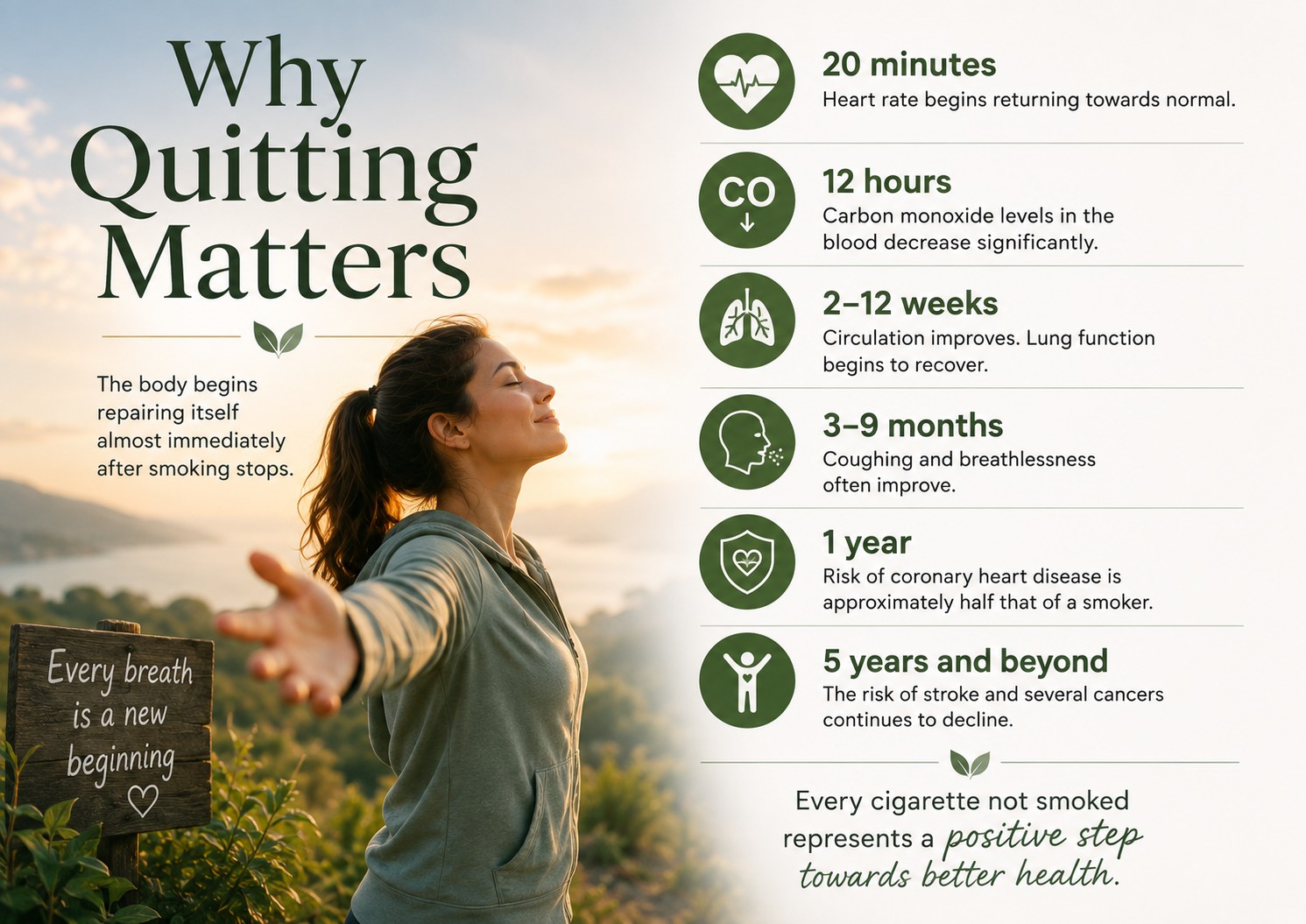
The Body Begins Repairing Itself
Why Is Smoking So Difficult To Quit
Many smokers believe they simply lack willpower.
In reality, nicotine addiction changes how the brain responds to reward, stress and habit.
Each cigarette reinforces a neurological pathway that links smoking with relief, comfort or pleasure.
Over months and years these pathways become deeply ingrained.
This is why cravings may occur even after physical nicotine withdrawal has passed.
Common triggers include:
• Stress • Anxiety • Boredom • Coffee or alcohol • Social situations • Driving • Certain friends or environments • Finishing meals • Telephone conversations
For many smokers, these triggers become automatic.
Successful quitting therefore involves addressing both the physical dependence on nicotine and the behavioural patterns that have developed over time.
In reality, nicotine addiction changes how the brain responds to reward, stress and habit.
Each cigarette reinforces a neurological pathway that links smoking with relief, comfort or pleasure.
Over months and years these pathways become deeply ingrained.
This is why cravings may occur even after physical nicotine withdrawal has passed.
Common triggers include:
• Stress • Anxiety • Boredom • Coffee or alcohol • Social situations • Driving • Certain friends or environments • Finishing meals • Telephone conversations
For many smokers, these triggers become automatic.
Successful quitting therefore involves addressing both the physical dependence on nicotine and the behavioural patterns that have developed over time.
Common Causes of Smoking Dependence
Although every smoker’s journey is unique, several common factors contribute to nicotine addiction.
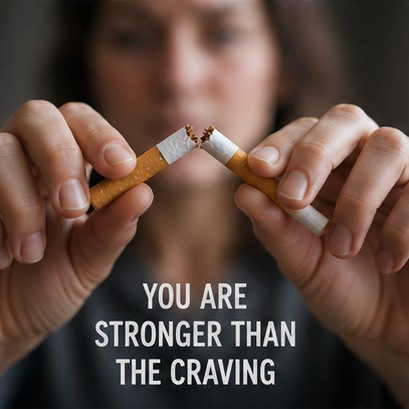
Nicotine Dependence
Nicotine stimulates the brain’s reward pathways, encouraging repeated use and eventually creating physical dependence.
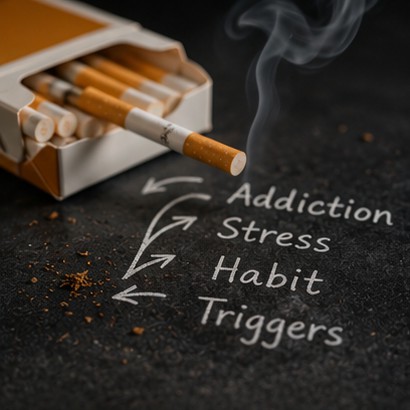
Stress & Emotion
Many people begin or continue smoking because cigarettes appear to relieve stress, anxiety or emotional discomfort.

Social Influences
Family members, friends or workplace environments can reinforce smoking behaviour, making quitting more challenging.
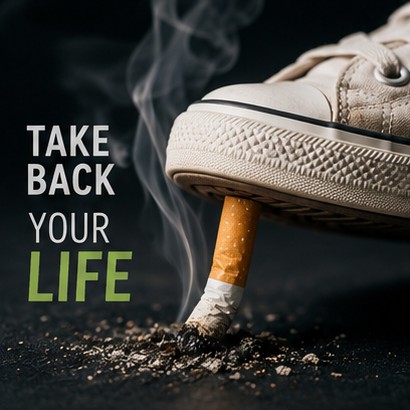
Habit Forming
Smoking becomes linked with routine behaviours performed throughout the day.
Examples include:
• Morning coffee
• Driving to work
• Work breaks
• After meals
• Social gatherings
• Alcohol consumption

Fear of Withdrawal
Many smokers continue because they fear experiencing withdrawal symptoms, including irritability, anxiety and cravings.
Understanding that these symptoms are temporary can help individuals approach quitting with greater confidence.

Book Your Consultation
Ready to Take the First Step?
There is no perfect time to stop smoking. There is only the decision to begin.
There is no perfect time to stop smoking. There is only the decision to begin.
Sign & Symptoms of Nicotine Dependence
Lorem ipsum dolor sit amet, consectetur adipiscing elit. Ut elit tellus, luctus nec ullamcorper mattis, pulvinar dapibus leo.
Physical Signs
- Strong cigarette cravings
- Smoking shortly after waking
- Increased tolerance
- Restlessness without cigarettes
- Difficulty concentrating
- Headaches when attempting to quit
- Increased appetite
- Sleep disturbances
Emotional Symptoms
- Anxiety
- Irritability
- Mood changes
- Low frustration tolerance
- Feeling unable to cope without smoking
Behavioural Signs
- Smoking automatically without thinking
- Planning activities around smoking
- Continuing despite health concerns
- Smoking during illness
- Multiple unsuccessful quit attempts
Why Many Quit Attempts Fail
Research shows that many smokers make several attempts before successfully quitting permanently.
This does not mean failure.
Each attempt teaches valuable lessons about:
- Personal triggers
- Stress management
- Behaviour patterns
- Motivation
- Support systems
Many unsuccessful attempts occur because individuals focus solely on stopping nicotine while overlooking the emotional, behavioural and habitual aspects of addiction.
A comprehensive programme addresses all of these factors together.
There Is Hope
Thousands of people successfully stop smoking every year.
With the right combination of motivation, support, practical strategies and holistic care, becoming smoke-free is an achievable goal.
At Spark Of Life, our role is not to judge or pressure you. We are here to support you with compassion, respect and evidence-informed care, helping you move towards a healthier, smoke-free future at a pace that works for you.
With the right combination of motivation, support, practical strategies and holistic care, becoming smoke-free is an achievable goal.
At Spark Of Life, our role is not to judge or pressure you. We are here to support you with compassion, respect and evidence-informed care, helping you move towards a healthier, smoke-free future at a pace that works for you.
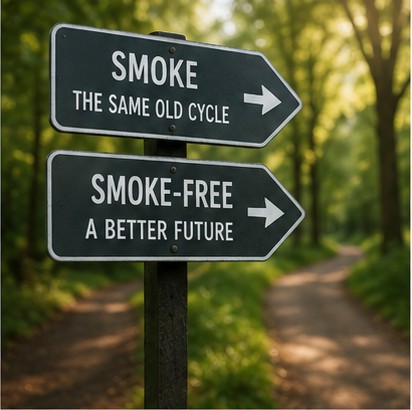
A Holistic Approach to Quitting Smoking
There is no single solution that works for everyone when it comes to stopping smoking. While some people quit without assistance, many find that combining determination with professional support significantly improves their chances of long-term success.
At Spark Of Life, we recognise that nicotine addiction is influenced by the body, the mind and everyday behaviours. Our Stop Smoking Programme therefore focuses on supporting the whole person rather than simply addressing the cigarette itself.
Auricular Acupuncture is not intended to replace your commitment to quitting; instead, it is used as a supportive therapy to help make the journey more manageable. Many people report feeling calmer, experiencing fewer cravings and finding it easier to cope with the emotional and physical challenges that can accompany smoking cessation.
At Spark Of Life, we recognise that nicotine addiction is influenced by the body, the mind and everyday behaviours. Our Stop Smoking Programme therefore focuses on supporting the whole person rather than simply addressing the cigarette itself.
Auricular Acupuncture is not intended to replace your commitment to quitting; instead, it is used as a supportive therapy to help make the journey more manageable. Many people report feeling calmer, experiencing fewer cravings and finding it easier to cope with the emotional and physical challenges that can accompany smoking cessation.
How Auricular Acupuncture May Help
Auricular (Ear) Acupuncture is a recognised form of acupuncture in which specific points on the outer ear are stimulated using very fine, sterile needles.
In Traditional Chinese Medicine, the ear is viewed as a microsystem that reflects the entire body. Modern neurophysiological research also suggests that stimulation of certain areas of the ear can influence the nervous system through branches of the vagus nerve, trigeminal nerve and cervical plexus, affecting relaxation and stress responses.
Although research into the precise mechanisms continues, Auricular Acupuncture is believed to help by supporting the body’s natural ability to regulate stress and restore balance.
Within the context of smoking cessation, treatment may help support:
In Traditional Chinese Medicine, the ear is viewed as a microsystem that reflects the entire body. Modern neurophysiological research also suggests that stimulation of certain areas of the ear can influence the nervous system through branches of the vagus nerve, trigeminal nerve and cervical plexus, affecting relaxation and stress responses.
Although research into the precise mechanisms continues, Auricular Acupuncture is believed to help by supporting the body’s natural ability to regulate stress and restore balance.
Within the context of smoking cessation, treatment may help support:

Reduction of Nicotine Cravings
Minimizes the urge to smoke, making it easier to stay committed.
Relaxation of The Nervous System

Improved Emotional Stability
Alleviates symptoms like irritability and restlessness.
Improved Sleep Quality
Increased sence of wellbeing

Better Stress Management
Promotes relaxation and supports overall health.
Greater confidence during the quitting process
One of the most widely recognised forms of Auricular Acupuncture used in addiction support is the NADA (National Acupuncture Detoxification Association) Protocol.
Developed over four decades ago, the NADA Protocol is now used internationally in hospitals, addiction recovery centres, mental health programmes, disaster relief settings and community wellness initiatives.
The protocol involves the gentle insertion of fine needles into five specific points on each ear.
Each point has a traditional function within Chinese Medicine while also contributing to an overall calming and balancing effect.
These five points are traditionally associated with supporting:
- Relaxation
- Emotional balance
- Stress reduction
- Improved sleep
- Mental clarity
- Recovery from addiction
- General wellbeing
The treatment itself is quiet and deeply relaxing. Many people use the treatment time simply to rest, breathe and allow the nervous system to settle.
Unlike many other treatments, there is no need to talk during the session. The experience is intentionally peaceful and restorative.
Supporting the Nervous System
One of the greatest challenges during smoking cessation is the body’s response to the absence of nicotine.
Nicotine has been stimulating the brain’s reward pathways, stress response and neurotransmitter systems, often for many years.
When smoking stops, the nervous system needs time to adapt.
During this adjustment period, many people experience:
• Restlessness • Anxiety • Irritability • Poor concentration • Difficulty sleeping • Mood fluctuations • Increased appetite
Auricular Acupuncture aims to support this period of transition by encouraging the body’s natural relaxation response.
Many clients report that after treatment they feel:
• More centred • Less overwhelmed • Better able to cope with cravings • More optimistic • More emotionally balanced
This calmer state often makes it easier to make healthier choices when cravings arise.
Nicotine has been stimulating the brain’s reward pathways, stress response and neurotransmitter systems, often for many years.
When smoking stops, the nervous system needs time to adapt.
During this adjustment period, many people experience:
• Restlessness • Anxiety • Irritability • Poor concentration • Difficulty sleeping • Mood fluctuations • Increased appetite
Auricular Acupuncture aims to support this period of transition by encouraging the body’s natural relaxation response.
Many clients report that after treatment they feel:
• More centred • Less overwhelmed • Better able to cope with cravings • More optimistic • More emotionally balanced
This calmer state often makes it easier to make healthier choices when cravings arise.
Breaking The Habit Loop
Stopping smoking involves much more than overcoming physical dependence on nicotine.
Many smoking behaviours become deeply linked with daily routines and emotional responses.
For example:
- Morning coffee → Cigarette
- Driving → Cigarette
- Work break → Cigarette
- Stress → Cigarette
- Celebration → Cigarette
- Loneliness → Cigarette
Over time these patterns become automatic.
The Spark Of Life programme encourages clients to gradually replace these learned behaviours with healthier responses.
Auricular Acupuncture supports this process by helping create moments of calm in which new habits can begin to develop.
Our goal is not simply to remove cigarettes from your life—but to help replace them with healthier routines that support long-term wellbeing.
Lifesyle Guidance
Successful smoking cessation rarely depends upon one intervention alone.
During your programme you will also receive practical guidance that may include:
Managing Triggers
Learning to identify situations that increase the urge to smoke.
Stress Management
Simple breathing exercises, relaxation strategies and mindfulness techniques that reduce emotional reliance on cigarettes.
Nutrition
Understanding how healthy eating can reduce cravings and support recovery.
Hydration
Drinking sufficient water may assist the body’s natural elimination processes and improve general wellbeing.
Physical Activity
Gentle exercise helps improve circulation, mood and lung function while reducing stress.
Sleep
Improving sleep supports emotional resilience and reduces vulnerability to cravings.
What Does the Research Say?
Scientific research into acupuncture for smoking cessation has produced mixed results.
Some studies suggest that acupuncture may reduce cravings, improve relaxation and increase comfort during withdrawal, while other reviews conclude that more high-quality research is required before firm conclusions can be made regarding long-term quit rates.
This balanced picture is important.
At Spark Of Life we do not claim that acupuncture is a guaranteed cure for nicotine addiction.
Instead, we position Auricular Acupuncture as one component of a comprehensive support programme that includes education, behavioural change, motivation and personalised care.
Several systematic reviews have reported that:
- Auricular Acupuncture may help reduce withdrawal symptoms in some individuals.
- Participants often report lower stress levels during treatment.
- Improvements in anxiety and sleep may indirectly support smoking cessation.
- The greatest benefit appears to occur when acupuncture is combined with broader behavioural support.
The Spark Of Life Stop Smoking Programme
Our programme has been designed to provide structured support throughout the quitting process.
Initial Wellness Consultation
Your first appointment allows us to understand:
• Your smoking history
• Previous quit attempts
• Current health concerns
• Lifestyle factors
• Sources of stress
• Motivation for quitting
• Personal goals
Together we develop a realistic and achievable plan.
Personalised Quit Strategy
Rather than applying a one-size-fits-all approach, your programme is tailored to your circumstances.
We discuss:
• Your preferred quit date
• Potential triggers
• Support systems
• Daily routines
• Practical strategies
• Milestones to celebrate
AcuDetox Sessions
Treatment sessions provide an opportunity to:
• Reduce stress
• Encourage relaxation
• Support emotional wellbeing
• Reinforce commitment to your goals
Most sessions last approximately 45 minutes.
Many clients find these appointments become valuable moments of self-care during a challenging period of change.
Progress Reviews
Throughout the programme we monitor:
• Cravings
• Withdrawal symptoms
• Mood
• Sleep
• Stress levels
• Progress towards goals
Adjustments can be made as your needs evolve.
What to Expect During Treatment
Day One
- Comprehensive assessment
- Personal plan
- First acupuncture treatment
- Preparing for your quit date
Week One
- Managing cravings
- Reinforcing motivation
- Stress management
- Lifestyle support
Week Two
- Building confidence
- Strengthening new habits
- Reviewing progress
Week Three
- Maintaining momentum
- Relapse prevention strategies
- Long-term wellness planning
Additional sessions are available for individuals who have smoked heavily for many years or who would benefit from continued support.
A Partnership for Long-Term Success
Stopping smoking is not simply about giving something up.
It is about gaining:
- Better health
- Greater freedom
- Increased energy
- Improved breathing
- More confidence
- Financial savings
- A longer, healthier future
At Spark Of Life, we see ourselves as partners in that journey.
Our aim is to provide a calm, supportive environment where you feel encouraged, respected and empowered to make lasting changes—one step, one day and one decision at a time.
Your Investment in a Healthier Future
Choosing to stop smoking is one of the most valuable investments you can make—not only in your health but also in your quality of life.While cigarettes may seem inexpensive when purchased one packet at a time, the cumulative financial cost over months and years can be substantial. Beyond the direct expense are the hidden costs associated with reduced fitness, medical care, lost productivity and the long-term impact on health.
Our Stop Smoking Programme is designed to provide structured support during one of life’s most significant lifestyle changes.
Rather than paying for individual treatments, you are investing in a comprehensive programme that combines professional guidance, Auricular Acupuncture and ongoing encouragement throughout your journey.
Programme Options
Initial Consultation
Recommended for clients who would like to explore whether the programme is right for them.
Includes:
• Comprehensive wellness assessment
• Smoking history review
• Health and lifestyle discussion
• Goal setting
• Personal recommendations
• Individual treatment plan
Duration: Approximately 30 minutes
Stop Smoking Programme
Our most popular option.
Includes:
✔ Comprehensive Initial Consultation
✔ Personal Quit Plan
✔ Weekly Auricular Acupuncture treatments
✔ Progress Reviews
✔ Lifestyle Guidance
✔ Stress Management Strategies
✔ Relapse Prevention Planning
✔ Ongoing encouragement throughout the programme
Programme Length: Four Weeks
Extended Support Programme
Ideal for long-term smokers or those who have experienced multiple unsuccessful quit attempts.
Includes:
• Everything in the Standard Programme
• Additional acupuncture sessions
• Ongoing progress monitoring
• Continued motivation and support
• Long-term maintenance planning
Programme Length: Six to Eight Weeks
What Makes Spark Of Life Different?
Stopping smoking is about much more than nicotine.
At Spark Of Life we understand that cigarettes often become intertwined with stress, emotions, routines and identity.
That is why our programme focuses on supporting the whole person. Our approach includes:
At Spark Of Life we understand that cigarettes often become intertwined with stress, emotions, routines and identity.
That is why our programme focuses on supporting the whole person. Our approach includes:
Individualised Care
Our treatments take place in a peaceful setting where you can relax, reflect and focus on your wellbeing.
A Holistic Philosophy
Rather than concentrating solely on smoking, we support better sleep, reduced stress, improved emotional wellbeing and healthier daily habits.
Professional Training
Treatment is provided by a qualified practitioner with experience in Auricular Acupuncture and the internationally recognised NADA AcuDetox Protocol.
Evidence-Informed Practice
Our recommendations are guided by current research, clinical experience and a commitment to providing balanced, honest information.Frequently Asked Questions
Does acupuncture make me stop smoking?
No treatment can make someone stop smoking against their will.
Auricular Acupuncture is used as a supportive therapy that may help reduce stress, improve relaxation and make withdrawal symptoms more manageable. Long-term success depends upon your commitment and willingness to make lasting lifestyle changes.
Auricular Acupuncture is used as a supportive therapy that may help reduce stress, improve relaxation and make withdrawal symptoms more manageable. Long-term success depends upon your commitment and willingness to make lasting lifestyle changes.
Will I stop smoking after one treatment?
Most people experience a dramatic reduction in cravings after their first session, while others benefit from a series of treatments over several weeks.
Some individuals responds differently.
Some individuals responds differently.
Does the treatment hurt?
Most people are surprised by how gentle the treatment feels.
The needles are extremely fine, and many clients experience only a brief sensation as they are inserted.
Most people find the session deeply relaxing.
The needles are extremely fine, and many clients experience only a brief sensation as they are inserted.
Most people find the session deeply relaxing.
How many sessions will I need?
Just one!
Most clients begin with a four-week programme.
Long-term smokers or those with complex lifestyles may benefit from additional sessions.
Your treatment plan will be discussed during your consultation.
Most clients begin with a four-week programme.
Long-term smokers or those with complex lifestyles may benefit from additional sessions.
Your treatment plan will be discussed during your consultation.
Can I continue taking my medication?
Yes.
Auricular Acupuncture is generally used alongside conventional medical care.
Always continue taking prescribed medication unless advised otherwise by your doctor.
Auricular Acupuncture is generally used alongside conventional medical care.
Always continue taking prescribed medication unless advised otherwise by your doctor.
Can I combine acupuncture with nicotine replacement products?
Yes. You may find that you don’t need them.
Many people successfully combine acupuncture with nicotine patches, gum or other smoking cessation strategies.
Your programme can be adapted to support your chosen approach.
Many people successfully combine acupuncture with nicotine patches, gum or other smoking cessation strategies.
Your programme can be adapted to support your chosen approach.
Is everything discussed confidential?
Absolutely.
All consultations and treatments are conducted professionally and confidentially.
All consultations and treatments are conducted professionally and confidentially.
What happens if I relapse?
Relapse does not mean failure. Most people do not relapse.
Some people require several attempts before becoming permanently smoke-free.
If you experience a setback, we encourage you to return so we can review what happened and adjust your programme accordingly.
Every quit attempt provides valuable experience.
Some people require several attempts before becoming permanently smoke-free.
If you experience a setback, we encourage you to return so we can review what happened and adjust your programme accordingly.
Every quit attempt provides valuable experience.
Ready to Quit for Good?
Take the first step toward a healthier, smoke-free life with AcuQuit. Book your session today and let Spark of Life support you on your journey to freedom.
Success Stories
“After years of smoking, AcuQuit helped me quit for good. The cravings are gone, and I feel amazing!”
Thandi S.
Kirstenhof
“I was surprised how relaxed I felt after my first session. AcuQuit made quitting so much easier.”
David L.
Tokai
“The support from Spark of Life kept me motivated. I’ve been smoke-free for six months now!”
Claire B.
Constantia
Ready to Take the First Step?
There is no perfect time to stop smoking.
There is only the decision to begin.
Whether this is your first attempt or your tenth, choosing to seek support is a positive step towards a healthier future.
Every day without cigarettes allows your body to begin repairing itself.
Every healthy decision builds confidence.
Every step forward is progress.
At Spark Of Life, we are here to walk that journey with you.
Book Your Initial Consultation…
Let’s create your personalised Stop Smoking Plan
References
- Bier, I. D., et al. (2002). “Auricular acupuncture for smoking cessation: A randomized controlled trial.” American Journal of Public Health, 92(10), 1642-1647.
- Wu, T. P., et al. (2007). “Effects of auricular acupuncture on nicotine withdrawal symptoms.” Journal of Alternative and Complementary Medicine, 13(8), 771-778.
- Wang, Y., et al. (2019). “Acupuncture for stress reduction in addiction recovery.” Evidence-Based Complementary and Alternative Medicine, 2019, 1-10.
- National Acupuncture Detoxification Association. (2023). “Auricular acupuncture protocols for addiction.” Retrieved from www.acudetox.com.
- Choy, L., et al. (2015). “Acupuncture as an adjunct for smoking cessation: A systematic review.” Journal of Smoking Cessation, 10(2), 96-105.