
Book Appointment Now
Should You Be Taking Cold Plunges? A Traditional Chinese Medicine Perspective
Understanding Cold Plunges Through the Lens of Traditional Chinese Medicine: Are They Right for You?
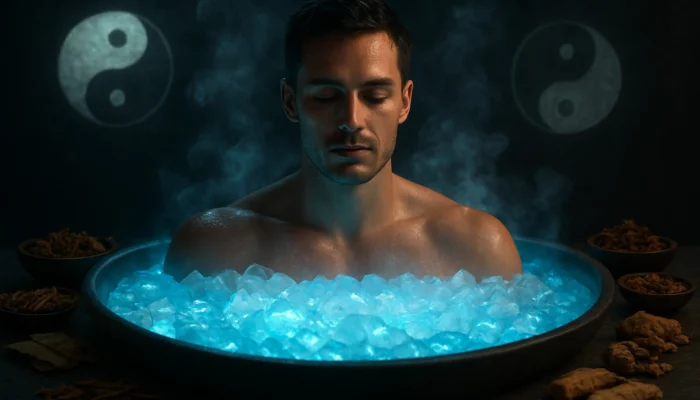
In recent years, cold plunges, ice baths, and cold-water immersion have surged in popularity. Athletes, wellness influencers, and biohackers promote cold exposure as a universal remedy, claiming benefits that range from enhanced recovery and resilience to improved mental health.
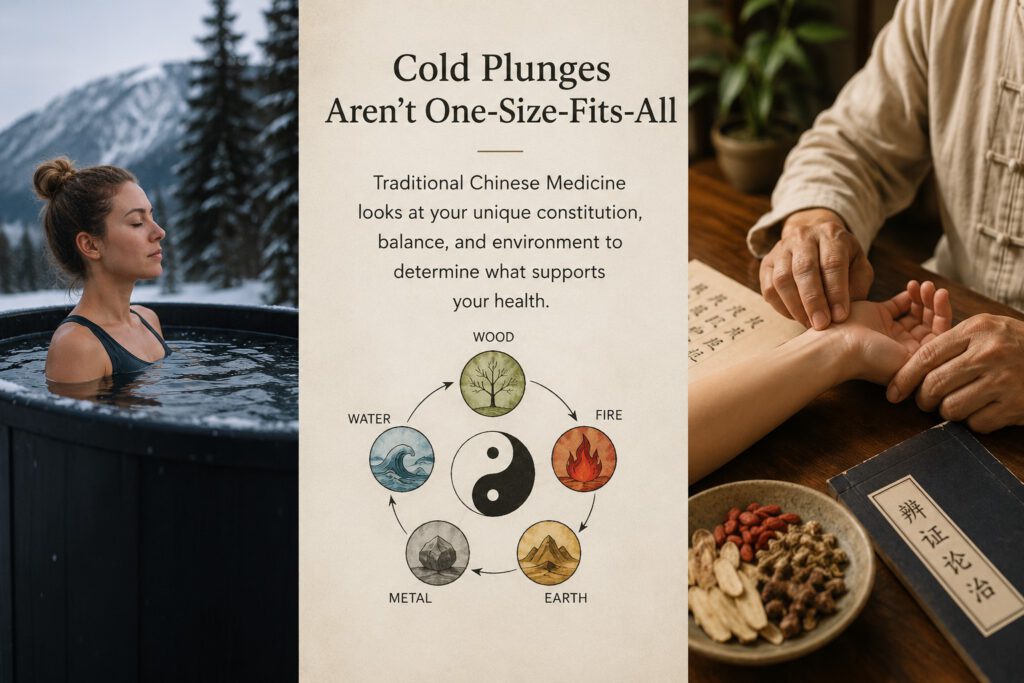
Traditional Chinese Medicine (TCM) emphasizes that there is no universal solution when it comes to health practices. What benefits one individual might harm another. The effectiveness of cold plunges is highly individual, depending on a person’s constitution, health condition, and existing imbalances.
What Insights Does Research Provide on Cold Plunges?
The excitement around cold plunges largely stems from studies conducted on specific groups.
A significant number of these studies focus on young, healthy, physically active individuals, including athletes and military personnel. Notably, around 85% of participants in cold-water immersion research have been male, resulting in a lack of comprehensive data on women, older adults, and individuals facing chronic illnesses or fatigue.
While some groups may derive benefits from cold-water immersion, it’s crucial to understand that the findings cannot be generalized to everyone.
What Physiological Changes Occur During Cold Exposure?
Upon exposure to cold water, the body initiates multiple physiological responses almost immediately.
Research indicates that cold exposure can:
- Induce vasoconstriction (the narrowing of blood vessels)
- Heighten activity in the sympathetic nervous system (the fight-or-flight response)
- Trigger the release of adrenaline and noradrenaline
- Elevate cortisol levels in certain individuals
- Initiate an acute stress response
These reactions are part of the body’s natural mechanisms for survival, helping to maintain core temperature under cold conditions.
For individuals who are healthy and resilient, these responses may act as a hormetic stressor—an acceptable challenge that fosters adaptation. Conversely, for those who are already fatigued, exhausted, or dealing with chronic stress, introducing another stressor might not yield positive effects.
Understanding Cold Effects in Traditional Chinese Medicine
Traditional Chinese Medicine has long recognized the impacts of cold on the body.
In TCM, cold is seen as a pathogenic influence that causes contraction and slows bodily functions. Cold exposure tends to:
- Constrict circulation
- Slow the flow of Qi and Blood
- Impair digestive health
- Reduce Yang energy
- Increase stiffness and pain
- Worsen existing cold-related conditions
Yang energy represents the body’s warmth, vitality, metabolic processes, and its ability to transform and mobilize substances. A strong Yang promotes effective circulation, digestion, energy levels, and resilience.
Conversely, when Yang is weak, exposure to cold can impose additional stress on the body.
Identifying Yang Deficiency: What Does It Mean?
Yang deficiency is a frequent observation in Chinese Medicine clinics and can develop gradually due to chronic stress, overexertion, inadequate recovery, illness, aging, or inherent factors.
Common indicators of Yang deficiency include:
- Cold extremities (hands and feet)
- Feeling cold in comfortable environments
- Chronic fatigue or exhaustion
- Low motivation or mood
- Weak digestive function
- Bloating or loose stools
- Frequent urination
- Low back weakness
- Poor resilience to stress
- Pain that eases with warmth
For those exhibiting these symptoms, routine cold plunges could exacerbate existing imbalances by further inhibiting Yang and slowing circulation.
When Are Cold Plunges Not Recommended?
TCM suggests that cold plunges may not be suitable for individuals who experience:
Cold Extremities
Persistent cold hands and feet often signify poor circulation or Yang deficiency. Introducing more cold may further hinder circulation instead of improving it.
Chronic Fatigue and Burnout
Individuals suffering from exhaustion, adrenal fatigue, chronic stress, or burnout typically require restorative approaches rather than additional physiological stressors.
Digestive Weakness
Digestive health is a cornerstone of TCM. Cold exposure can weaken digestive Yang, especially in those susceptible to bloating, loose stools, poor appetite, or sluggish digestion.
Joint Pain Alleviated by Heat
Joint pain, muscle tension, or chronic discomfort that improves with warmth are often categorized as cold-type conditions in TCM. Cold immersion could aggravate these issues.
Frequent Nighttime Urination
Experiencing frequent urination at night may indicate Kidney Yang deficiency—a condition that generally benefits from warming and nourishing strategies rather than repeated cold exposure.
Low Energy and Mood
While some individuals report mood improvements after cold exposure, those showing signs of depletion may find that consistent cold plunges leave them feeling increasingly drained.
Who Might Find Cold Plunges Beneficial?
TCM does not categorize cold as inherently harmful. The effectiveness of any treatment should always align with the individual’s needs.
Cold plunges may be more appropriate for individuals displaying:
Excess Heat Symptoms
Signs of excess heat may include:
- Feeling hot frequently
- Excessive perspiration
- Facial flushing
- Irritability
- Intense thirst
- Inflammatory conditions
- Restlessness
For these individuals, controlled cold exposure might help restore balance by counteracting excess heat.
Robust Yang and Resilient Health
Individuals with naturally high energy levels, strong digestion, effective circulation, and resilient constitutions may tolerate cold exposure well.
Specific Inflammatory Conditions
For those experiencing excess heat and inflammation, cold therapy can offer symptomatic relief when applied correctly.
The Importance of Individual Assessment in TCM
One fundamental principle of Chinese Medicine is the differentiation of patterns.
Two individuals might receive entirely different treatment recommendations despite sharing the same diagnosis or symptoms.
For example:
- One individual suffering from fatigue may benefit from warming therapies, nourishing foods, and acupuncture to enhance Yang.
- Another individual with fatigue linked to excess heat and inflammation may find relief through cooling approaches.
This highlights why TCM practitioners evaluate the individual holistically rather than applying a one-size-fits-all protocol.
At Spark of Life, acupuncture and TCM consultations focus on identifying underlying patterns of imbalance, providing tailored treatment strategies. Rather than following health fads, treatments are customized to fit the individual’s constitution, symptoms, and health aspirations.
A Comprehensive View on Cold Plunges
Cold plunges are not universally beneficial or detrimental.
The expanding body of research indicates potential advantages for certain populations, particularly healthy, active individuals. Nonetheless, most studies focus on young, healthy males, leaving significant gaps in understanding other demographic responses.
From a TCM perspective, the application of cold exposure should be carefully considered based on the individual’s constitution.
For some, cold plunges could enhance resilience and help manage excess heat.
For others, especially those showing signs of Yang deficiency, fatigue, digestive issues, or chronic cold symptoms, they may lead to further imbalances.
Ultimately, the most effective approach to any therapeutic intervention is one that is personalized rather than dictated by trends.
Common Questions About Cold Plunges
Are cold plunges healthy?
Yes, they can be beneficial for certain individuals. Current research highlights potential advantages for specific populations, particularly healthy, active adults. they are not suitable for everyone and should be evaluated in the context of overall health and individual constitution.
Can cold plunges exacerbate fatigue?
Yes, they can. Those experiencing exhaustion, burnout, chronic stress, or Yang deficiency may find that repeated cold exposure leaves them feeling more depleted.
Does Traditional Chinese Medicine endorse cold plunges?
TCM does not provide blanket recommendations. The appropriateness of cold exposure varies based on an individual’s constitution and specific patterns of imbalance.
How can I tell if I have Yang deficiency?
Common signs include cold extremities, fatigue, low mood, digestive issues, frequent urination, and symptoms that improve with warmth. A qualified TCM practitioner can determine if this pattern is present.
What alternatives exist if cold plunges aren’t suitable for me?
Many individuals may find greater benefit from warming and restorative therapies such as acupuncture, moxibustion, dietary adjustments, stress management techniques, and personalized lifestyle recommendations.
Can acupuncture enhance circulation and energy levels?
Yes, acupuncture is often used to improve circulation, strengthen Yang, boost energy levels, support digestion, and address underlying imbalances that contribute to symptoms such as fatigue and cold extremities.
If you are uncertain whether cold plunges are aiding your health or worsening symptoms like fatigue, cold hands and feet, digestive problems, or low energy, schedule a consultation with the practitioners at Spark of Life for a personalized assessment and treatment plan.
References
Cain T, Brinsley J, Bennett H, et al. Effects of cold-water immersion on health and wellbeing: A systematic review and meta-analysis. PLOS One. 2025.
Briganti G, et al. Research examining autonomic nervous system responses to cold-water immersion and cold exposure.
Cold Water Immersion Protocol Optimization Across Exercise Modalities: A Systematic Review and Network Meta-analysis. BMC Sports Science, Medicine and Rehabilitation. 2026.
Maciuba-Iwanicka M, et al. The effects of cold exposure on cardiovascular and cardiac autonomic control responses in healthy individuals: A systematic review and meta-analysis. Autonomic Neuroscience. 2024.
Maciocia G. The Foundations of Chinese Medicine. Elsevier.
Deadman P, Al-Khafaji M, Baker K. A Manual of Acupuncture.


Your exploration of cold plunges through the lens of Traditional Chinese Medicine (TCM) really highlights an important conversation about the individualized nature of health practices. It’s interesting how the rising popularity of cold exposure often overlooks the diverse physiological responses people may have. While proponents tout benefits like enhanced recovery and resilience, the reality is that not everyone reacts positively to such stressors.
This is such a fascinating topic! I’ve always been curious about how different health practices resonate with various bodies. It’s interesting how TCM highlights the individuality of health solutions. I’ve tried cold plunges a few times, and while I enjoyed the immediate rush, I noticed that my body reacts quite differently compared to friends who swear by it for recovery.
Isn’t it wild how cold water has somehow morphed into the latest panacea? I tried a cold plunge last weekend and I’m pretty sure I came close to an existential crisis—more “What am I doing with my life?” than “Wow, I’m so refreshed!”
You’ve raised some intriguing points about the limitations of cold plunges as a one-size-fits-all solution for health. It seems essential to remember that while many athletes and performers tout the benefits of cold exposure, their experiences often come from a very specific and well-conditioned demographic. As you mentioned, Traditional Chinese Medicine’s perspective on individual health profiles speaks volumes to this discussion.
You bring up a solid point about the narrow lens through which many athletes view cold exposure. Their experiences can indeed give a skewed perspective, especially when we consider that they’re often at the pinnacle of physical ability. The hype surrounding cold plunges is often based on anecdotal evidence rather than universal benefits.
It’s fascinating to see the intersection of modern wellness trends and Traditional Chinese Medicine (TCM) philosophies. Your piece highlights the nuanced approach TCM takes towards health—recognizing that what benefits one may not suit another. This concept resonates with me personally, especially as I’ve experimented with cold exposure over the past year.
It’s really cool to hear that you’re connecting with those ideas in the piece. The way TCM emphasizes individuality is something that often gets overlooked in more mainstream discussions about health. It makes total sense that what works well for one person might not do the trick for someone else. I think that’s part of what makes exploring wellness so interesting and sometimes a bit of a maze.
Your exploration of cold plunges through the lens of Traditional Chinese Medicine (TCM) raises some fascinating points about individual health practices and holistic well-being. As someone who has dabbled in various wellness trends, I’ve often grappled with the balance between popular approaches that tout a one-size-fits-all mentality and the nuanced understanding that TCM offers.
I really appreciate how you’ve woven the principles of Traditional Chinese Medicine (TCM) into the conversation about cold plunges. It’s such a crucial perspective that often gets overlooked in the rush to embrace wellness trends. I’ve been curious about cold exposure myself, especially after hearing so many success stories from friends and influencers.
You’ve brought up a pivotal point regarding the individualized nature of health practices in traditional Chinese medicine (TCM). It’s interesting how the modern wellness trend of cold plunges contrasts with TCM’s more nuanced approach. While the popularity of ice baths is undeniable, particularly in athletic circles, it raises questions about the holistic implications of such practices.
This is a fascinating look at cold plunges! Every time I hear about someone hopping into a frigid tub, my mind races back to my ill-fated attempt at an ice bath after a particularly grueling hike. Let’s just say my version of “enhanced resilience” involved a lot of whimpering and a strong desire for a warm blanket!
I can totally relate to that ice bath experience! The sheer shock of plunging into frigid water can catch anyone off guard. There’s something about that initial gasp that just takes your breath away—both literally and figuratively. It’s interesting how the idea of “enhanced resilience” can sometimes feel more like a test of willpower than a soothing recovery method, right?
I really appreciate the nuanced approach you took in discussing cold plunges through the lens of Traditional Chinese Medicine (TCM). It’s so refreshing to see an acknowledgment that one size definitely doesn’t fit all when it comes to health practices. I’ve seen a lot of folks jumping on the cold plunge bandwagon lately, and while I love the idea of harnessing the revitalizing effects of cold water, it does make me wonder how well it really works for different people based on their unique health circumstances.
This exploration of cold plunges through the TCM lens raises some intriguing considerations about individualized health practices. I’ve personally experienced the invigorating effects of cold exposure, but I’ve also noticed its impact varies based on my physical and emotional state at the time. For some, the shock of the cold can be energizing, while for others, it might trigger anxiety or discomfort.
You’ve brought up such an important point about the individual nature of health practices in your discussion of cold plunges through the lens of Traditional Chinese Medicine (TCM). It’s fascinating how what works wonders for one person can be detrimental for another. Personally, I’ve dabbled in cold therapy myself and have found it to be both invigorating and daunting, depending on my mood and physical state at the time.
I appreciate your exploration of cold plunges through the lens of Traditional Chinese Medicine (TCM). The idea that there isn’t a one-size-fits-all solution to health practices truly resonates with me. Many wellness trends tend to promote a single approach as a cure-all, often overlooking individual differences.
This exploration of cold plunges through the lens of Traditional Chinese Medicine (TCM) is fascinating! I appreciate how you highlight the individual nature of health practices—it’s a crucial reminder that what works for one person might not work for another. TCM’s focus on balance and the unique constitution of each individual really adds depth to the conversation around wellness trends like cold exposure.
Your analysis of cold plunges through the lens of Traditional Chinese Medicine raises an important point about the individuality of health practices. It’s fascinating how the current wellness trend often neglects the nuances that TCM emphasizes, particularly the idea that what works for one person may not necessarily work for another due to varying constitutions and imbalances.
I really appreciate how you’ve highlighted the nuances surrounding cold plunges, especially through the lens of Traditional Chinese Medicine. It’s fascinating to think about how different bodies respond to such stimuli based on individual constitution and health imbalances. I’ve dabbled in cold exposure therapy myself, and while I’ve heard people rave about the invigorating effects, my own experience was mixed.
I find your exploration of cold plunges in the context of TCM really fascinating! It’s so true that health practices can’t be one-size-fits-all; what works wonders for one person might not suit another at all. I’ve personally dabbled in cold showers rather than full-on plunges, and while I’ve heard all the hype about their benefits, I think my experience mirrored your point about individualized reactions. Initially, I felt invigorated, but after a while, I noticed that it seemed to ramp up my anxiety rather than soothe it.
It’s interesting how personal experiences with cold plunges and cold showers can really highlight that whole TCM idea of “balance.” It sounds like you had a rollercoaster experience with them. I can relate to that initial rush of feeling invigorated. There’s something raw and refreshing about them, but the way our bodies respond can really vary.
Your exploration of cold plunges through the lens of Traditional Chinese Medicine (TCM) raises some essential points that merit deeper consideration. The idea that health practices should be tailored to the individual is a cornerstone of TCM, and it feels particularly relevant in our modern landscape, where trends often overshadow a personalized approach to wellness.
I found your take on cold plunges through the TCM lens really intriguing. It’s so refreshing to see an approach that emphasizes individual differences rather than just jumping on the bandwagon of popular trends. I’ve dabbled with cold exposure myself, mostly out of curiosity after hearing all the buzz, but I quickly realized that what works wonders for my athletic friends doesn’t necessarily translate to my own experience.
You’ve raised an essential point about the individuality of health practices in your discussion on cold plunges. I’ve been intrigued by the wave of enthusiasm for cold exposure, especially given the narratives surrounding its purported benefits. However, as you’ve pointed out, the TCM perspective on personalized health is crucial.
This is a fascinating topic, and you’ve really hit the nail on the head with the whole “no one-size-fits-all” philosophy of Traditional Chinese Medicine. Approaching health through such a personalized lens often feels like trying to crack a secret code. I mean, one minute you’re in a hot yoga class with everyone else channeling their inner zen, and the next you’re debating whether plunging into a near-freezing tub of water makes you a wellness guru or just a masochist.
I appreciate the nuanced perspective you’ve shared on cold plunges through the lens of TCM. It’s fascinating how practices that have gained traction in modern wellness circles often overlook the importance of individual constitution—a principle that TCM emphasizes deeply.
This perspective on cold plunges through the lens of Traditional Chinese Medicine truly resonates with me. It’s a reminder that health practices aren’t one-size-fits-all. I remember trying a cold plunge after hearing all the buzz about its benefits—while I found some rejuvenation in the experience, I also felt a bit out of balance afterward. It makes me think of how TCM places such emphasis on individual constitution and balance.
It’s great to hear your perspective on the connection between cold plunges and Traditional Chinese Medicine. That feeling of rejuvenation versus the sense of being out of balance really highlights how personal experiences can vary so much with health practices. TCM really emphasizes tuning in to your body’s signals, doesn’t it?
The perspective you’ve provided on cold plunges through the lens of Traditional Chinese Medicine (TCM) is thought-provoking and highlights a crucial aspect of wellness that often goes overlooked: individualization. The popularity of cold exposure as a wellness trend can sometimes create a one-size-fits-all mentality—an approach that may neglect the principles of TCM which emphasize that health is not merely the absence of illness, but rather a harmonious balance tailored to the individual’s unique constitution.
I really appreciate the nuanced perspective you bring on cold plunges through the lens of Traditional Chinese Medicine. It’s so true that health practices aren’t one-size-fits-all. I’ve personally experimented with cold exposure, and while it felt refreshing at times, there were days when it simply didn’t sit well with me. It makes me consider the holistic approach of TCM, where we’re encouraged to listen to our bodies and understand our unique constitutions.
It’s great to hear that you resonate with the perspective on cold plunges from a Traditional Chinese Medicine viewpoint. It’s so true that our bodies have their own rhythms, and what works wonders for one person might not feel right for another. Cold exposure can definitely have its highs and lows, and it’s all about paying attention to how we respond on a given day.