
Book Appointment Now
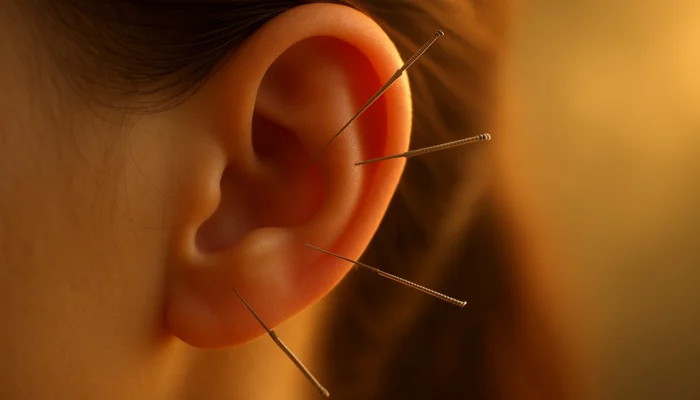
Switch Off Stress: How Ear Acupuncture and the NADA Protocol Rebalance Your Autonomic Nervous System
Understanding Your Nervous System: The Role of AcuDetox and Auricular Acupuncture
Your body is equipped with an intrinsic alarm system that is essential for survival during critical situations. This mechanism is known as the sympathetic nervous system, often referred to as the “fight-or-flight” response within your autonomic nervous system. It is designed to activate momentarily to aid in escaping a threat or managing an emergency, subsequently shutting down to allow the body to revert to a state of equilibrium.
However, the demands of contemporary life often keep this alarm system engaged for extended periods. Continuous exposure to news cycles, financial stressors, work pressures, and a barrage of notifications results in a state of persistent, low-grade survival mode. When the body remains in this heightened state of sympathetic activation, it prioritizes immediate survival needs over long-term health, leading to the suppression of essential functions such as digestion, immune response, cellular repair, and restorative processes. Consequently, effective healing becomes challenging when both the brain and body perceive ongoing threats.
To facilitate the transition out of this heightened state, proactive measures are essential. One of the most powerful natural methods to achieve this is by stimulating the vagus nerve, a crucial component of the parasympathetic nervous system (commonly known as the “rest-and-digest” system). Engaging in slow, deep nasal breathing is a straightforward technique that activates the vagus nerve, signaling safety to the brain and permitting healing processes to resume. Achieving a state of peace is not merely a luxurious feeling; it is biologically necessary for genuine recovery and repair.
Understanding the Autonomic Nervous System: The Importance of Balance
The autonomic nervous system functions primarily without conscious effort and comprises two opposing branches that must maintain a dynamic equilibrium:
– Sympathetic (often termed “fight-or-flight”): This branch accelerates heart rate, redirects blood flow to the muscles, inhibits digestion and immune responses, and triggers the release of stress hormones, including cortisol and adrenaline.
– Parasympathetic (known as “rest-and-digest”): This branch decelerates heart rate, aids digestion and nutrient absorption, decreases inflammation, fosters immune repair, and promotes restorative sleep and emotional stability.
Chronic dominance of the sympathetic system is a prevalent issue in our fast-paced society, leading to outcomes such as anxiety, insomnia, digestive issues, chronic inflammation, fatigue, and challenges in recovering from stress or trauma. Restoring balance by enhancing parasympathetic activity—especially through vagal stimulation—is a fundamental step toward achieving better health and well-being.
How Does Auricular Acupuncture Enhance Nervous System Balance?
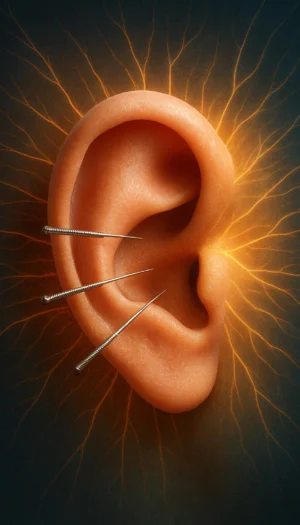
Auricular acupuncture provides a direct, non-invasive method to influence the autonomic nervous system’s balance. The outer ear, particularly the concha, is densely innervated by the auricular branch of the vagus nerve. By stimulating specific points in this region, practitioners can activate parasympathetic activity and down-regulate excessive sympathetic responses.
Clinical research demonstrates substantial benefits from auricular acupuncture:
– Studies indicate that acupuncture targeting the auricular branch of the vagus nerve significantly lowers heart rate and enhances heart rate variability (HRV) — an essential marker of vagal tone and autonomic flexibility — compared to placebo treatments.
– Systematic reviews affirm that auricular stimulation lowers heart rate and fosters cardiovascular autonomic balance, favoring parasympathetic dominance.
– These effects contribute to the body’s transition out of chronic stress mode, resulting in improved sleep, decreased anxiety, enhanced digestion, and reduced systemic inflammation.
In summary, auricular acupuncture serves as a gentle manual reset for the nervous system, bolstering the body’s inherent capacity to shift from survival mode into a state of healing and recovery.
Exploring AcuDetox (NADA Protocol): An Effective Tool for Stress and Behavioral Health
AcuDetox, also recognized as the NADA protocol (National Acupuncture Detoxification Association), consists of a standardized auricular acupuncture treatment involving five specific points. These points—Sympathetic, Shen Men (Spirit Gate), Kidney, Liver, and Lung—are primarily situated within the concha region, which is innervated by the vagus nerve.

Originally developed in the 1970s to assist with recovery from substance use disorders, this protocol has proven effective across a wide spectrum of conditions beyond addiction. It is now frequently utilized as an adjunctive treatment for stress reduction, trauma, anxiety, PTSD, insomnia, and overall behavioral health enhancement.
Significant benefits, supported by research and clinical observations, include:
– Alleviation of anxiety, agitation, and stress-related symptoms
– Reduction of cravings and withdrawal discomfort during addiction recovery
– Enhancement of sleep quality and emotional stability
– Improvement in overall autonomic function, particularly increased parasympathetic activity
– Induction of a profound sense of calm and grounding, often characterized as “clear-minded relaxation”
Reviews of the NADA protocol illustrate positive outcomes across diverse populations, with notable improvements in symptom severity, treatment engagement, and overall quality of life. This treatment modality is non-verbal, adaptable to group settings, cost-effective, and remarkably safe, making it an ideal choice for hospitals, community clinics, disaster relief efforts, and wellness initiatives.
Moreover, numerous NADA points directly impact vagal pathways and the sympathetic nervous system, allowing the protocol to naturally restore autonomic balance without the need for medication.
The Significance of These Approaches in Modern Life
In an era designed for perpetual stimulation, many individuals experience an overactive sympathetic nervous system while their parasympathetic recovery mechanisms remain underactive. Auricular acupuncture, along with the NADA/AcuDetox protocol, offers accessible and evidence-based strategies to facilitate the transition from a state of alertness to one of safety and healing.
Whether utilized independently or in conjunction with traditional medical care, these ear-based therapies can assist in:
– Reducing chronic stress and anxiety levels
– Enhancing heart rate variability and vagal tone
– Supporting emotional regulation and trauma recovery
– Promoting overall resilience and well-being
There is no need to accept a state of perpetual survival as your norm. Simple and targeted stimulation of the ear can activate your body’s intrinsic relaxation system, creating the biological conditions required for effective healing.
If you are prepared to support your nervous system more effectively, consider reaching out to a qualified practitioner who specializes in auricular acupuncture or the NADA protocol. Your body inherently possesses the ability to heal; it often just requires assistance in remembering that it is safe.
Essential References for Further Reading
– Boehmer AA, et al. (2020). Acupuncture at the auricular branch of the vagus nerve enhances heart rate variability. Heart Rhythm O2 (full text).
– Hua K, et al. (2023). Cardiovascular effects of auricular stimulation — a systematic review. Frontiers in Neuroscience (full text).
– Stuyt EB, et al. (2016). The National Acupuncture Detoxification Association protocol: A review of the evidence. Journal of Acupuncture and Meridian Studies (full text).
– Stuyt EB (2018). NADA Protocol for Behavioral Health. Medicines (full text).
– He W, et al. (2012). Auricular Acupuncture and Vagal Regulation. Evidence-Based Complementary and Alternative Medicine (full text).
Your nervous system is attentive and responsive. Gentle, targeted stimulation of the ear may be one of the simplest yet most effective means to help restore its balance.
Frequently Asked Questions about Auricular Acupuncture
What exactly is auricular acupuncture and how does it work?
Auricular acupuncture is a specialized form of acupuncture that focuses on stimulating precise points on the ear to promote healing and alleviate a variety of health conditions, including stress and anxiety.
How can acupuncture be beneficial for stress relief?
Acupuncture provides stress relief by encouraging relaxation, lowering anxiety levels, and enhancing emotional balance, making it a powerful tool for managing daily pressures and stressors.
Is auricular acupuncture considered safe for everyone?
Yes, auricular acupuncture is widely regarded as safe when performed by qualified practitioners using sterile equipment, which minimizes the risk of complications and side effects.
How often should I schedule acupuncture treatments for optimal results?
The frequency of acupuncture treatments can vary based on individual needs; however, many clients find that weekly sessions initially yield the best outcomes, gradually transitioning to bi-weekly or monthly sessions as their condition improves.
Can acupuncture positively influence my sleep quality and patterns?
Absolutely! Numerous clients report improved sleep quality through regular acupuncture sessions, as the treatment effectively addresses underlying issues such as stress and anxiety that disrupt sleep patterns.
What should I expect during my first acupuncture session?
During your initial session, expect a comprehensive consultation followed by targeted acupuncture treatment, where practitioners will prioritize your comfort and ensure a positive experience throughout the process.
Are there any side effects associated with acupuncture treatments?
While side effects are rare, some individuals may experience mild bruising or soreness at the needle insertion sites. Proper technique and care can help minimize these occurrences significantly.
How does acupuncture complement other therapies and treatments?
Acupuncture enhances the effectiveness of other therapies by promoting relaxation, alleviating pain, and improving overall health, making it an excellent adjunct treatment option for various conditions.
What types of health conditions can auricular acupuncture effectively treat?
Auricular acupuncture is beneficial for a wide range of conditions, including chronic pain, anxiety, insomnia, and digestive issues, providing a holistic approach to health and wellness.
How can I locate a qualified acupuncturist in South Africa?
To find qualified acupuncturists, search local directories, seek recommendations from healthcare providers, or refer to professional associations that list accredited practitioners.
Connect with us on Facebook!
@import url(https://www.sparkoflife.co.za/wp-content/plugins/siteorigin-panels/css/front-flex.min.css); #pgc-4492-0-0 { width:100%;width:calc(100% – ( 0 * 30px ) ) } #pl-4492 .so-panel { margin-bottom:30px } #pl-4492 .so-panel:last-of-type { margin-bottom:0px } #pg-4492-0.panel-has-style > .panel-row-style, #pg-4492-0.panel-no-style { -webkit-align-items:flex-start;align-items:flex-start } @media (max-width:780px){ #pg-4492-0.panel-no-style, #pg-4492-0.panel-has-style > .panel-row-style, #pg-4492-0 { -webkit-flex-direction:column;-ms-flex-direction:column;flex-direction:column } #pg-4492-0 > .panel-grid-cell , #pg-4492-0 > .panel-row-style > .panel-grid-cell { width:100%;margin-right:0 } #pl-4492 .panel-grid-cell { padding:0 } #pg-4492-0 .panel-grid-cell-empty { display:none } #pl-4492 .panel-grid .panel-grid-cell-mobile-last { margin-bottom:0px } }

Your post really strikes a chord with me because I’ve felt this tension in my own life as well. It’s fascinating how our bodies are wired for survival; I mean, the sympathetic nervous system has its place, especially in emergencies. I can’t help but think about how our ancestors must have had to rapidly respond to real dangers—like predators or natural disasters. But fast forward to today, and the “threats” we face are often more abstract, like deadlines and social media pressures, which doesn’t feel quite as life-or-death but still cranks our stress levels up.
Your insights into the sympathetic nervous system and its implications in our modern, stressful environment resonate deeply with me. I often find myself reflecting on how the constant influx of information and societal pressures can lead to a prolonged state of stress that undermines our overall well-being. The concept of AcuDetox and auricular acupuncture as tools for countering this chronic activation is particularly interesting.
Ah, the classic “fight-or-flight” scenario! It’s like our bodies are stuck in a never-ending action movie where the villain is… well, everyday life. I often catch myself in that sympathetic spaghetti – wallowing in notifications as if they’re my personal doom patrol.
Totally get what you’re saying—life has a way of feeling like a chaotic action scene. Those notifications really do have that doom patrol vibe, don’t they? It’s amazing how something so small can trigger such a big response in our bodies. I’ve found it helpful to pause and breathe when that “sympathetic spaghetti” starts cooking. Even a few moments of stepping back can turn that fight-or-flight instinct into a chance to reset. It’s like hitting the pause button on the movie and remembering we’re the ones holding the remote. Have you tried any tricks for managing the stress that comes from those notifications? I’m curious how others navigate that whirlwind.
Your insights into the sympathetic nervous system’s role in our daily lives highlight a critical aspect of modern wellness that often goes overlooked. The fact that our bodies can remain in a state of persistent sympathetic activation due to ongoing stressors is not just a fascinating physiological observation; it poses significant implications for our long-term health.
I really appreciate how you’ve highlighted the impact of our modern lifestyle on the sympathetic nervous system. It’s interesting to think about how technologies designed to connect us, like social media and instant notifications, can often keep our ‘fight-or-flight’ response on high alert. I’ve noticed in my own life that when I take even short breaks from screens and the news, I feel a tangible shift in my mood and overall well-being.
I really resonated with what you shared about the sympathetic nervous system and its essential role in our survival toolkit. It’s so fascinating how something so instinctual can be altered by modern life. I’ve noticed over the years just how much pressure we put on ourselves through constant connectivity, endless news cycles, and the demands of everyday life. It’s almost like we’ve collectively agreed to stay in that heightened state of awareness, even when there isn’t an actual threat present.
This exploration of the sympathetic nervous system and its implications for health is incredibly relevant, particularly in our fast-paced modern lives. I find it fascinating how our bodies are so adept at prioritizing survival through the “fight-or-flight” response, yet that same mechanism can become a double-edged sword when stress is chronic.
Your thoughts on the sympathetic nervous system and its impact on our health resonate deeply. It’s interesting to think about how our bodies are wired for quick responses to threats—like a built-in alarm system ready to go off at a moment’s notice. But as you highlighted, when that alarm stays on, it can really take a toll on our health.
Your exploration of the sympathetic nervous system and its implications in our modern lives prompts me to reflect on how often we overlook the critical balance between our survival instincts and overall health. While you rightly point out the role of stressors in perpetuating this “fight-or-flight” mode, I feel it’s essential to delve deeper into the broader societal implications of this state.
Your insights into the sympathetic nervous system and its impact on our daily lives truly resonate. I’ve often found that the constant hustle and bustle can lead me to feel perpetually on edge, which complicates my ability to relax and engage in self-care practices. The connection between this prolonged sympathetic activation and the suppression of vital functions like digestion is particularly striking; it’s as if we’re running on a low battery without realizing how much that affects our overall health.
It’s fascinating how our modern lifestyle can keep us in that heightened state of sympathetic activation for so long. I’ve definitely felt the weight of constant notifications and stressors impacting my ability to unwind. I’ve found that integrating practices such as meditation and mindful breathing alongside techniques like Auricular Acupuncture can help reset that balance. It’s interesting to think about the broader implications of chronic stress on our long-term health and wellness. How do you think community support and social connections can play a role in alleviating some of these pressures? I’d love to hear if others have found specific practices or techniques that have worked for them!
It’s fascinating to consider how our modern lifestyles keep the sympathetic nervous system engaged longer than it should be. I’ve personally noticed that when I make small changes like reducing screen time or practicing meditation, it significantly shifts my mental and physical well-being. The role of AcuDetox and auricular acupuncture seems particularly promising in this context. It reminds me of how various cultures have long recognized the importance of balance and the body’s innate ability to heal. I’m curious if anyone has explored combining these techniques with mindfulness practices or other stress reduction methods. It could be interesting to discuss how these holistic approaches might work together to help us find equilibrium amid our hectic lives.
Ah, the “fight-or-flight” response—my body seems to think there’s a tiger lurking behind every email notification! It’s wild how our modern world keeps us in this sympathetic activation mode. I mean, I can’t even remember the last time I truly relaxed without a “but what if…” thought popping into my head. I once tried to meditate, and I’m pretty sure my nervous system just sent me a “404: Calm Not Found” error.
It’s funny how our bodies can react like that, isn’t it? Our ancestors had real dangers to worry about, like tigers and other predators. Now, it feels like the biggest threats we face often come from our phones. Those notifications can pack a punch, and it’s like we’re all wired to respond as if they’re life-or-death situations.