
Book Appointment Now
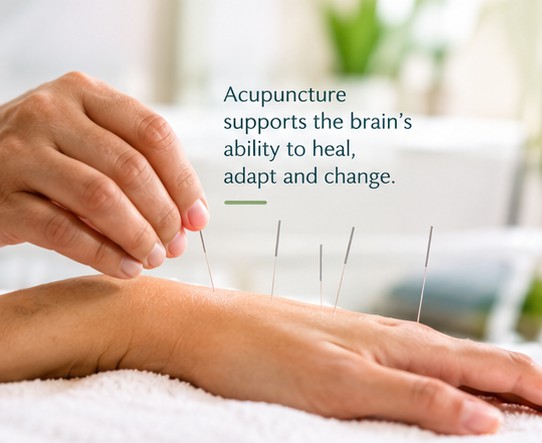
Acupuncture and Brain Neuroplasticity: New Stroke Research (2026)
Acupuncture’s Impact on Brain Adaptability: Groundbreaking MRI Study Offers Hope for Stroke Recovery
A pivotal study conducted in 2026 demonstrates observable alterations in brain structure and neural pathways after acupuncture treatment, providing promising insights into neuroplasticity and its implications for integrative healthcare.
Can Acupuncture Facilitate Brain Recovery After Stroke?
Could acupuncture offer more than just symptom relief? Might it actually assist the brain in reshaping itself to enhance movement recovery following a stroke?
A captivating study published in June 2026 in CNS Neuroscience & Therapeutics sharpens this inquiry. Researchers Xin Yu and their team explored the effects of targeted acupuncture on individuals recovering from an ischaemic stroke. They utilized clinical assessments and advanced magnetic resonance imaging (MRI) to analyze changes in motor function and neural activity. Access the original research paper here.
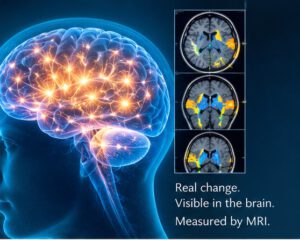 The results were promising. Patients who received acupuncture at specific therapeutic points exhibited enhancements in motor function, alongside measurable increases in grey matter volume and improved brain network organization. These significant changes were not seen in patients receiving sham acupuncture at non-therapeutic sites.
These findings are crucial as they bridge clinical observations made by practitioners and patients with tangible changes occurring in the nervous system.
For stroke survivors, the ability to regain movement can significantly enhance daily living. Achieving milestones such as standing, walking, grasping objects, dressing independently, or performing daily tasks symbolizes much more than a mere improvement in clinical scores. It represents renewed independence, dignity, and hope.
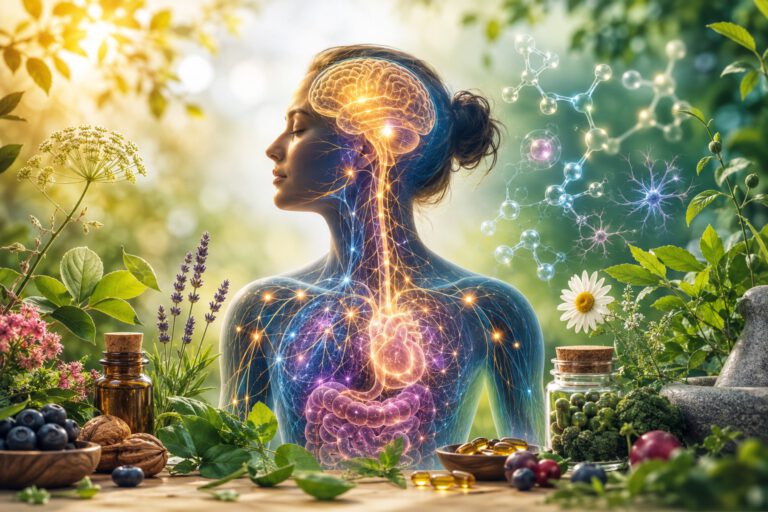
This study contributes to the expanding body of scientific research examining acupuncture as a complementary healthcare approach. It illustrates the concept of neuroplasticity: the brain’s extraordinary capacity to adapt, reorganize, and modify its connections in response to experiences and interventions.
At Spark of Life Acupuncture Cape Town, we recognize the importance of such research. It showcases how contemporary neuroscience can delve into the physiological impacts of traditional therapeutic methods, allowing us to better understand the connection between acupuncture, the nervous system, and overall human health.
Comprehending Stroke and the Journey to Regain Movement
A stroke occurs when the brain’s blood supply is interrupted, either through blockage or bleeding, leading to damage in brain tissue. The study by Yu and colleagues specifically examined ischaemic stroke, which is characterized by the obstruction of a blood vessel supplying the brain.
Brain cells require a steady flow of oxygen and nutrients. When this supply is disrupted, the affected area can endure injury, hampering the functions governed by that region.
When the motor areas of the brain are compromised, the consequences may include weakness, reduced coordination, or paralysis on one side of the body, commonly referred to as hemiparesis or hemiplegia.
An individual might struggle to lift an arm, grip an object, move a foot, or coordinate the sequence of movements necessary for walking. Even if some movement remains, the brain may face challenges in controlling it smoothly and reliably.
Movement is not regulated by a single isolated area of the brain. It relies on an intricate network that includes motor regions, sensory processing areas, the cerebellum, and other neural pathways.
The brain must plan an action, dispatch signals to the body, receive sensory feedback, and make ongoing adjustments. A stroke can disrupt multiple components of this system simultaneously.
Recovery, therefore, encompasses more than just healing an injured area. It also necessitates the nervous system’s adaptation and reorganization in performing essential functions.
Rehabilitation and the Brain’s Potential for Change
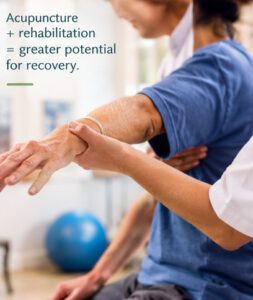
 Traditional stroke rehabilitation incorporates various strategies, including physiotherapy, occupational therapy, medical treatments, and purposeful movement practice. These interventions aid individuals in maximizing their remaining abilities and developing effective methods for daily activities.
Repetition is particularly vital because the nervous system can adapt based on experiences. As individuals practice a movement, the neural pathways involved may change and enhance their efficiency.
This remarkable capacity for change is referred to as neuroplasticity.
The question investigated by Yu and colleagues is whether targeted acupuncture can aid the changes occurring in the brain during this critical recovery phase.
Neuroplasticity: The Brain’s Capacity for Reorganization
For many years, the brain was considered an organ whose fundamental structure became relatively fixed after development. modern neuroscience has radically reshaped our understanding of this extraordinary organ.
We now recognize that the brain retains the ability to change throughout a person’s life.
Neuroplasticity refers to the nervous system’s ability to modify its structure, connections, and activity patterns in response to learning, experiences, injuries, and rehabilitation.
These changes can manifest at various levels. Connections between neurons may strengthen or weaken. Neural networks can change their modes of communication. Areas of the brain that survived an injury can become more involved in tasks once supported by different pathways.
After a stroke, this adaptability becomes crucial for recovery.
When a specific pathway is damaged, the nervous system may recruit surviving connections and reorganize its activity to facilitate the return of movement. Rehabilitation encourages this process through repetition, sensory feedback, and purposeful activity.
Neuroplasticity is not merely an abstract scientific concept. It explains why practice can enhance function, and why rehabilitation can continue to yield meaningful benefits over time.
The Significance of Brain Changes
Consider attempting to pick up a cup after experiencing a stroke. This seemingly simple task demands the brain to identify the object’s position, plan the movement, coordinate the arm and hand, control the grip strength, and interpret sensory feedback.
Multiple regions of the brain must work collaboratively to achieve this task.
The motor cortex is involved in voluntary movements, while sensory areas aid the brain in interpreting touch and limb positioning. The cerebellum contributes to timing, balance, and coordination. Other areas assist with planning, attention, and organizing complex actions.
When these systems are disrupted, executing movement becomes increasingly challenging.
If an intervention can influence the structure or organization of these networks in ways linked to improved motor performance, it presents a valuable opportunity for scientific exploration.
This is precisely why the 2026 acupuncture study is noteworthy: it examined both clinical recovery and brain alterations in tandem, rather than treating them as separate outcomes.
Insights from the 2026 Yu et al. Study: An Inside Look at the Brain
The research titled Neuroplastic Mechanisms of Acupuncture in Post-Stroke Motor Recovery: A Randomized Multimodal MRI Trial was published on June 3, 2026, in CNS Neuroscience & Therapeutics.
The goal of the researchers was to investigate how acupuncture might influence the structural and functional organization of the brain during the recovery process after a stroke.
They recruited individuals who had suffered an ischaemic stroke within the previous six weeks and were experiencing motor impairments on one side of their body.
Initially, 56 participants were randomized in the study. After the exclusion of six individuals who dropped out, and four who were removed from MRI analysis due to excessive head movement, the final imaging analysis included 46 participants: 30 in the therapeutic acupuncture group and 16 in the sham group.
Participants were divided into two groups:
The therapeutic acupuncture group received acupuncture at specific points known for motor rehabilitation.
The sham-acupuncture group underwent needling at non-therapeutic sites positioned one proportional cun lateral to the corresponding therapeutic points.
Both groups continued to receive standard pharmacological treatment for cerebrovascular disease, allowing the research to examine acupuncture alongside conventional medical care.
The study was single-blind; the acupuncturists were aware of the treatment being administered, while participants, clinical assessors, MRI technicians, and data analysts were kept unaware of the group assignments.
This design enabled researchers to compare outcomes between those receiving targeted acupuncture and those experiencing a similar treatment at different locations.
The Value of MRI in This Research
The researchers employed two complementary types of MRI analysis.
Structural MRI was utilized to estimate grey matter volume in various brain regions.
Resting-state functional MRI was employed to examine communication patterns and organizational structures across brain networks while participants were at rest.
These measurements allowed the researchers to explore two critical questions:
- Did targeted acupuncture result in observable changes in brain structure?
- Were the changes in brain network organization associated with enhancements in motor function?
The combination of clinical assessments and brain imaging provided a unique exploration of the potential mechanisms underlying acupuncture’s effects.
Study Results: Notable Improvements in Motor Function
 The researchers evaluated motor recovery using established clinical measures, including the Fugl-Meyer Assessment and the Brunnstrom Scale. They also employed the National Institutes of Health Stroke Scale to assess neurological impairment.
The results were promising.
Following the two-week treatment period, the therapeutic acupuncture group exhibited statistically significant enhancements in overall motor scores, upper-limb motor function, lower-limb motor function, and Brunnstrom measures for both upper and lower limbs.
The sham group also showed improvements on several metrics, including the Fugl-Meyer Assessment. it did not achieve statistically significant enhancements in the upper- and lower-limb Brunnstrom measures.
The study’s authors noted that limb motor improvements were significantly better in the therapeutic acupuncture group.
This finding is critical because the assessments were conducted using validated clinical instruments, rather than relying solely on the participants’ subjective experiences.
The study also recorded improvements in neurological impairment across both groups, indicating that post-stroke changes can be influenced by various factors during recovery. Nonetheless, the pattern of motor improvement favored the therapeutic acupuncture intervention.
For patients, this suggests that acupuncture could serve as a valuable complementary approach to be explored alongside established rehabilitation techniques.
The next area of inquiry revolves around what was occurring within the brain as these improvements were noted.
Grey Matter Volume: Observable Changes in Brain Structure
One of the most remarkable findings was the increase in MRI-measured grey matter volume across several brain regions following targeted acupuncture.
Grey matter is comprised of neuronal cell bodies, dendrites, synapses, and supportive structures involved in information processing. It plays a central role in movement, sensation, attention, learning, and various other functions.
The researchers noted changes in multiple areas associated with sensory processing, motor coordination, and information integration, including:
- The right middle frontal gyrus.
- The right postcentral gyrus.
- The right angular gyrus.
- The left superior parietal gyrus.
- Several regions of the cerebellum.
- Parts of the frontal and temporal cortices.
- Regions within the occipital cortex.
The sham group did not exhibit a similar pattern of significant grey matter volume changes.
The significance of these findings lies in the connection between acupuncture and measurable structural alterations in the brain.
Rather than merely noting that patients reported feeling better, the researchers identified differences in MRI-derived measurements that could be examined alongside clinical recovery.
Three Noteworthy Brain Regions
The study identified positive correlations between motor improvements and grey matter volume changes in three critical areas.
The right opercular inferior frontal gyrus
This region plays a role in complex information processing and action organization. Its activity is part of broader networks involved in planning and executing behavior.
Changes in this area may be significant for the intricate processes necessary for effective movement.
The postcentral gyrus
This area houses the primary somatosensory cortex, which aids the brain in processing touch and bodily positioning information.
Sensory feedback is crucial for coordinating movement. Without accurate data regarding the position of limbs, controlling movement precisely becomes increasingly challenging.
Changes in this region are particularly relevant concerning stroke rehabilitation.
Cerebellar region 10
The cerebellum is essential for balance, timing, and movement coordination. It helps refine actions and adjust movements based on sensory input.
The correlation between changes in this region and improved motor scores further emphasizes the need to explore how acupuncture may impact networks responsible for coordinated movement.
Collectively, these findings suggest that acupuncture may engage several interconnected systems, rather than solely affecting one isolated area of the brain.
Did the Brain Experience Growth?
The phrase “the brain grew back” encapsulates the enthusiasm surrounding these results, but it’s crucial to comprehend precisely what the researchers measured.
They observed increases in grey matter volume through structural MRI. This represents a measurable change in brain imaging consistent with structural plasticity.
MRI-derived grey matter volume does not directly correspond to neuron counts. An increase does not automatically imply that damaged brain cells regenerated or that the original injury was reversed.
Neuroplasticity encompasses various forms of change, including the remodeling of connections, alterations in synaptic structures, and reorganizations within neural tissue.
The encouraging takeaway is that the brain can undergo measurable structural changes, and this study found that such alterations coincided with improved motor recovery in the therapeutic acupuncture group.
This represents a significant scientific observation, moving the discussion beyond the notion that acupuncture only affects a person’s immediate symptom experience.
The research provides evidence of a link between targeted acupuncture, structural brain changes, and clinical recovery — a vital avenue for future exploration.
Acupuncture’s Influence on Brain Network Organization
The researchers also examined how various brain regions communicate and organize their activities.
The brain functions through interconnected networks that continually adjust their activity patterns based on ongoing tasks, information processing, and external demands.
The researchers focused partly on the default mode network, associated with internally directed thought and self-referential processing. This network interacts with other systems throughout the brain.
Using resting-state functional MRI, the researchers studied dynamic network organization, including a measure known as disjointedness.
Following targeted acupuncture, a statistically significant reduction in default mode network disjointedness was observed. A trend towards decreased flexibility was also noted, describing how often network regions change their functional community membership over time.
While these are technical measures of network organization, their broader significance is clear: the researchers detected changes in how the brain’s functional networks organized themselves after acupuncture.
Some of these changes were linked to improved motor outcomes.
The findings suggest that acupuncture’s potential effects may involve both structural plasticity and modifications in functional network dynamics.
This creates an encouraging framework for future research exploring how acupuncture interacts with the nervous system during recovery from neurological injuries.
The Importance of Therapeutic Points in Acupuncture
Acupuncture is not merely the insertion of needles at arbitrary locations. The selection of points, anatomical positioning, stimulation techniques, and treatment context are all critical components of an effective treatment protocol.
The Yu et al. study contrasted targeted acupuncture with sham needling at non-therapeutic sites. The observed differences in clinical outcomes and MRI measurements make these findings particularly intriguing.
The research supports further exploration into the significance of point selection and the specific methods employed during treatment.
Six Targeted Points in the Study
The researchers identified six acupuncture points commonly utilized in motor rehabilitation:
- Quchi (LI11) — located on the lateral aspect of the elbow crease.
- Neiguan — an acupuncture point found on the inner forearm.
- Hegu — situated on the back of the hand between the thumb and index finger.
- Zusanli (ST36) — located on the front of the lower leg, just below the knee.
- Sanyinjiao (SP6) — found on the inner lower leg, above the medial ankle.
- Yanglingquan (GB34) — located on the outer side of the lower leg, near the head of the fibula.
A technical note for practitioners: the published article incorrectly labels Neiguan as SJ5 and Hegu as SJ5. The correct codes are PC6 for Neiguan and LI4 for Hegu, respectively. Practitioners should verify the point locations against the published figure and supplementary material.
Details of the Treatment Protocol
The therapeutic acupuncture protocol consisted of ten sessions over two weeks, with five sessions per week, and stimulation lasting one minute at each therapeutic point to elicit de qi. In contrast, sham needling was performed at non-therapeutic locations one cun lateral to the corresponding points.
All treatments were administered by a licensed acupuncturist, while standard pharmacological treatment continued in both groups.
This detailed protocol is valuable, as it provides researchers and practitioners with a clearly defined treatment approach that can be studied and replicated in future research.
It also underscores the need to distinguish between various acupuncture modalities. The body acupuncture protocol utilized in this stroke study differs from auricular acupuncture or the NADA AcuDetox protocol.
Dr. Paul Nogier and the Need for Ongoing Acupuncture Research
The history of acupuncture features practitioners who combined clinical observations with systematic investigations.
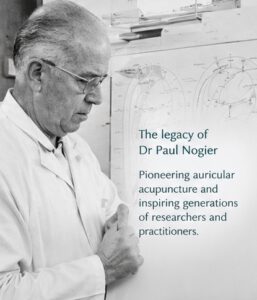 Dr. Paul Nogier, a French physician, was a key figure in the evolution of modern auricular acupuncture. His work contributed to the development of auricular diagnosis and treatment methods based on the external ear.
Nogier explored the relationships between ear regions and other body parts, developed a structured framework for auricular acupuncture, and helped elevate the modality to international prominence.
His contributions are a significant part of contemporary acupuncture history, illustrating how dedicated clinicians and researchers can observe patterns, formulate hypotheses, refine techniques, and promote further exploration.
In contrast, the modern study by Yu and colleagues employed a different research approach. Instead of focusing on the external ear, it utilized a specific body acupuncture protocol and advanced brain imaging techniques to investigate neurological changes associated with treatment.
Although these approaches differ, both highlight the ongoing effort to understand acupuncture through observation and scientific inquiry.
The advent of modern medical imaging has opened new avenues for investigating questions that earlier practitioners could only explore through clinical observation.
Researchers can now examine brain structure, functional connectivity, and physiological responses alongside clinical outcomes. This creates an opportunity to bridge the accumulated knowledge of acupuncture practice with contemporary neuroscience.
The history of acupuncture research is ongoing. It continues to evolve alongside the advent of new methodologies and investigations into new questions.
Implications of This Research for Integrative Healthcare
While the Yu et al. study centers on motor recovery after stroke, its broader implications extend to the scientific examination of acupuncture as a therapeutic method.
Acupuncture has been explored in relation to pain management, neurological function, nausea, and other health concerns. The evidence varies based on the condition, treatment methods, and outcomes being studied.
Research that integrates clinical assessments with objective physiological measurements is particularly beneficial, as it elucidates how an intervention works, rather than merely whether an outcome changes.
The 2026 study exemplifies this approach by investigating a defined acupuncture protocol, utilizing a comparison group, and measuring both clinical outcomes and brain changes.
For integrative healthcare, these findings are promising. They demonstrate how complementary therapies can be examined using contemporary neuroscience methods while honoring their distinct traditions and treatment approaches.
It reinforces the importance of posing specific questions:
- Which acupuncture protocols are most effective for specific conditions?
- What physiological changes occur during and after treatment?
- Which patients are most likely to benefit from acupuncture?
- How can acupuncture be integrated with other healthcare modalities?
- Which clinical outcomes are most significant for patients?
These inquiries can guide future research and assist practitioners in communicating more effectively about their services.
Connecting Research to the Work of Spark of Life Acupuncture Cape Town
 At Spark of Life, we offer services such as auricular acupuncture, NADA AcuDetox, facial acupuncture, energy healing, and wellness programs designed to help individuals address various aspects of their wellbeing.
The Yu et al. study does not encompass a trial of all these services. it serves as a valuable example of the scientific investigation into acupuncture and its connection to the nervous system.
Understanding the different modalities and their intended applications is critical for both practitioners and clients.
Understanding Auricular Acupuncture
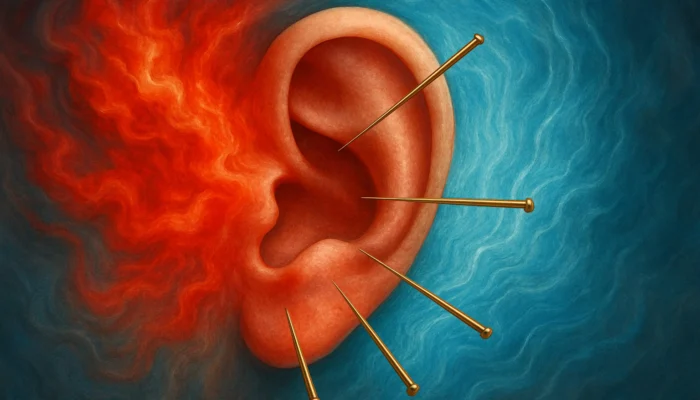
Auricular acupuncture focuses on stimulating specific points on the external ear. It has a unique history and body of clinical practice, with Dr. Paul Nogier being a pivotal figure in its modern development.
The study discussed here employed body acupuncture rather than auricular acupuncture. Its findings should, therefore, be interpreted as evidence related specifically to the body acupuncture protocol investigated.
Nonetheless, the study contributes to the broader scientific discussion about acupuncture and the nervous system — a dialogue that is pertinent to practitioners keen on comprehending the physiological effects of diverse acupuncture approaches.
Exploring NADA AcuDetox
The NADA AcuDetox protocol employs five standardized ear points and is utilized in supportive settings addressing substance-use challenges, stress, and emotional wellbeing.
It represents a distinct intervention with its own history, methodology, and research literature.
The stroke study did not evaluate NADA AcuDetox. its value lies in demonstrating how acupuncture research can investigate specific treatment protocols and measurable outcomes.
Support for Stress and Emotional Balance
Stress can impact sleep, concentration, emotional health, and daily functioning. Spark of Life’s wellness programs provide supportive strategies for individuals seeking to manage these concerns and foster more sustainable habits.
Research into acupuncture and the nervous system offers a valuable scientific context for understanding the potential physiological effects of acupuncture.
The most pertinent evidence for stress-related services derives from studies that specifically examine stress, emotional symptoms, and the treatment approaches being utilized.
Lifestyle and Sleep Support
Sleep, movement, nutrition, and daily routines significantly contribute to overall wellbeing. Our lifestyle and wellness programs aim to assist individuals in developing practical strategies aligned with their circumstances and goals.
The overarching lesson from neuroscience is that the human body and brain are dynamic systems capable of adaptation to experiences. Understanding how various interventions can foster health and function remains an essential area for ongoing research.
Reiki and Energy Healing Practices
Reiki is a complementary practice offered at Spark of Life to promote relaxation and personal wellbeing. It employs a different methodology and evidence base compared to acupuncture.
The Yu et al. study does not specifically support Reiki. it emphasizes the importance of thoroughly examining complementary therapies to develop a clearer understanding of their effects, applications, and potential roles in supportive healthcare.
At Spark of Life, we advocate for an informed approach to wellbeing that recognizes the unique characteristics of different modalities while remaining open to new scientific discoveries.
Looking Ahead: Merging Clinical Experience with Modern Neuroscience
One of the most thrilling aspects of the Yu et al. research is how it unites clinical assessments with cutting-edge brain imaging techniques.
Acupuncture boasts a long-standing history of practice, while modern neuroscience offers tools that can enhance researchers’ ability to investigate its effects at previously challenging levels.
Structural MRI can reveal changes in regional brain metrics. Functional MRI can uncover communication patterns between brain areas. Clinical assessments can demonstrate whether these changes coincide with improvements in movement and neurological function.
When these methodologies converge, they provide a more detailed understanding of the relationship between treatment and recovery.
The 2026 study exemplifies the potential value of this research direction, finding that targeted acupuncture correlated with enhancements in motor function, increases in grey matter volume, and alterations in the organization of functional brain networks.
These findings pave the way for further investigation into the mechanisms involved, identifying patients most likely to benefit, and understanding the role acupuncture may play alongside rehabilitation.
Future studies can also explore whether the changes observed over two weeks are enduring and how they relate to daily independence and quality of life.
Each well-structured study contributes a valuable piece to our overall understanding.
A Positive Step Forward for Acupuncture and Stroke Rehabilitation
The 2026 study conducted by Yu and colleagues presents encouraging evidence that targeted acupuncture may facilitate motor recovery following ischaemic stroke while influencing measurable structural and functional aspects of the brain.
The researchers documented significant enhancements in multiple motor assessments, increases in MRI-derived grey matter volume across various brain regions, and changes in the organization of functional brain networks. Some of these structural and functional alterations were associated with better motor outcomes.
These findings add a vital dimension to our comprehension of acupuncture, suggesting that the connection between acupuncture and recovery may involve quantifiable changes in the brain’s structure and organization, rather than merely a shift in symptom perception.
For stroke patients and their families, this type of research offers hope for ongoing exploration of complementary rehabilitation strategies.
For acupuncture practitioners, it provides a valuable example of how modern imaging can be utilized to investigate the physiological processes related to treatment.
For the broader healthcare community, it underscores the necessity of ongoing collaboration between clinical practice, traditional therapeutic wisdom, and contemporary neuroscience.
The brain’s capacity for adaptation is one of the most remarkable attributes of human biology. Understanding how to support this ability is a worthy endeavor — and this study represents a significant contribution.
At Spark of Life Acupuncture Cape Town, we embrace research that enhances our understanding of acupuncture and its potential role in promoting wellbeing. We believe that informed practice, continuous learning, and an open-minded appreciation of emerging evidence are vital for the future of integrative healthcare.
Discover the services and programs at Spark of Life:
References
Yu, X., Zhao, N., Liu, Y., Zheng, S., Luo, D., Chen, Q., Zeng, F., Chen, J., Jia, Y., & Zou, Y. (2026). Neuroplastic Mechanisms of Acupuncture in Post-Stroke Motor Recovery: A Randomized Multimodal MRI Trial. CNS Neuroscience & Therapeutics, 32(6), e70955.
DOI: https://doi.org/10.1002/cns.70955
Full text: https://pmc.ncbi.nlm.nih.gov/articles/PMC13239543/

It’s fascinating to see how acupuncture is being viewed through the lens of neuroscience, especially in the context of stroke recovery. The findings from the study by Xin Yu and their team raise so many intriguing questions about the intersection of traditional practices and modern science. As someone who has long been interested in both alternative therapies and neuroplasticity, I find it encouraging to see empirical evidence supporting acupuncture’s role in not just symptom alleviation but potentially reshaping neural pathways.
This study is really fascinating! The idea that acupuncture could play a role in neuroplasticity is intriguing. I’ve always thought of acupuncture primarily as a way to relieve pain or manage stress, but this opens up a whole new avenue for recovery, especially for stroke survivors.
It’s fascinating to see how acupuncture is being recognized not just for its traditional role in pain relief, but also for its potential in brain recovery after a stroke. The idea of neuroplasticity is something that really resonates with me, especially given how adaptable our brains can be. I remember reading about other therapies that promote neuroplasticity, like music therapy or even virtual reality, which are also showing promising results in rehabilitation.
The findings from the 2026 study you mentioned are indeed intriguing and open up a plethora of questions regarding the intersection of traditional therapies like acupuncture and modern neuroscience. The idea that acupuncture could aid in brain recovery by not only alleviating symptoms but actively enhancing neuroplasticity is particularly fascinating. It reminds me of similar conversations around the efficacy of other integrative therapies, such as music therapy or mindfulness practices, which have also been shown to influence brain function and recovery after neurological events.