Book Appointment Now
PTSD & Trauma Support with AcuDetox
Helping the nervous system find its way back to calm
Trauma can leave the body feeling as though the danger is still present — even when the event has passed.
You may feel constantly on alert, struggle to sleep, become easily overwhelmed, experience anxiety or irritability, or find that certain situations, sounds or memories trigger a powerful physical response.

At Spark Of Life, we offer AcuDetox and auricular acupuncture as complementary support for people experiencing the effects of trauma and post-traumatic stress.
Our approach is gentle, practical and focused on helping you create the conditions for greater calm, regulation and resilience.
You do not have to face the effects of trauma alone.
When the body still feels under threat
Post-traumatic stress can affect much more than memory and emotions.
After a traumatic experience, the nervous system may remain highly vigilant, continually scanning for danger. This can make it difficult to relax, sleep, concentrate or feel completely safe.
People experiencing trauma-related symptoms may notice:
- Anxiety or persistent nervous tension
- Feeling constantly “on guard”
- Difficulty relaxing
- Poor or disturbed sleep
- Nightmares or intrusive memories
- Irritability or emotional reactivity
- Difficulty concentrating
- Feelings of overwhelm
- Physical tension and restlessness
- Changes in appetite or energy
- Avoidance of situations associated with the trauma
- A sense of being disconnected, numb or emotionally exhausted
These responses are not a sign of weakness.
They can be understandable responses of a nervous system that has learned to remain prepared for danger.

How AcuDetox may help
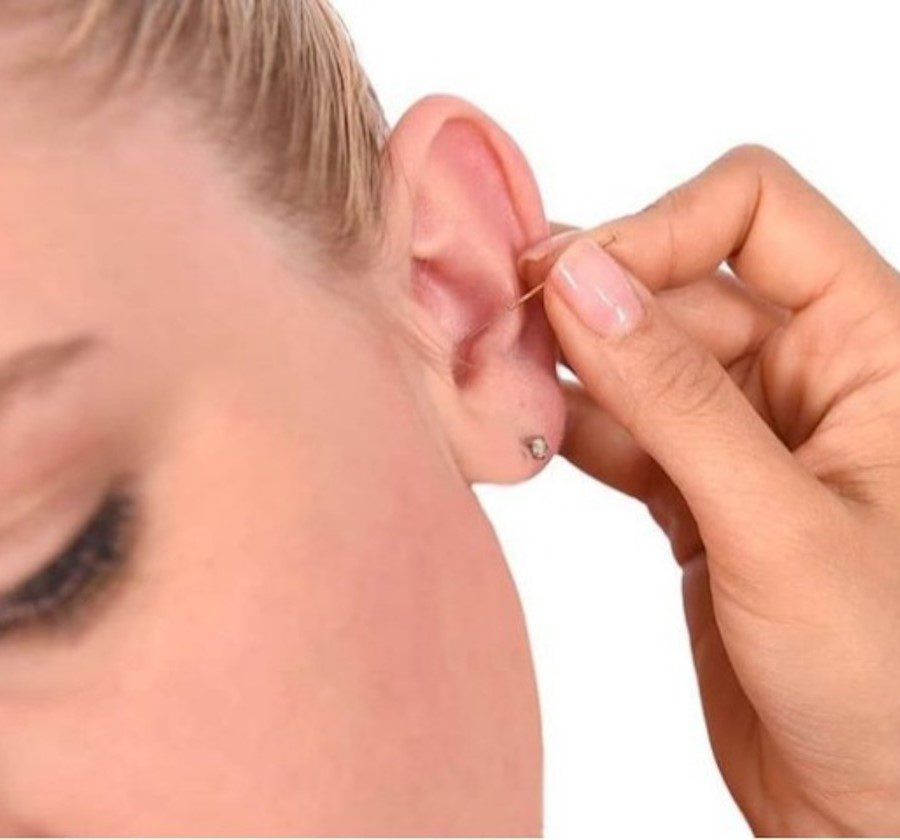
AcuDetox, also known as the NADA protocol, is a standardized form of auricular acupuncture using five small needles placed at specific points on the outer ear.
The protocol was originally developed in the context of addiction recovery and has subsequently been used more broadly in behavioural health, including stress, trauma and PTSD-related support. Research on NADA specifically remains mixed, and it is best understood as a complementary intervention rather than a stand-alone treatment for PTSD.
For someone affected by trauma, the simplicity of the treatment can be particularly valuable.
There is no need to describe every detail of what happened.
You can simply sit quietly while the treatment provides an opportunity to pause, breathe and allow the body to settle.
Supporting the nervous system
Trauma can leave the nervous system spending too much time in a state of heightened alertness.
Auricular acupuncture is increasingly being studied for its effects on autonomic regulation. The ear contains extensive sensory and autonomic nerve connections, and stimulation of these pathways may influence the balance between sympathetic activation and parasympathetic recovery.
This is one reason auricular acupuncture has attracted interest as a supportive approach for stress, anxiety, sleep disturbance and trauma-related symptoms.
Rather than asking you to “think your way” into relaxation, AcuDetox provides a quiet physical intervention that may help create a sense of calm and grounding.
What happens during an AcuDetox session?
Your first visit begins with a conversation about your current wellbeing and what you would like support with.
- You do not have to recount traumatic experiences in detail.
- The treatment itself involves the gentle placement of sterile, single-use acupuncture needles into five established points on the outer ear.
- You then sit quietly for approximately 30–45 minutes.
- Many people find the treatment deeply relaxing.
- You may simply sit, breathe, listen to music or allow yourself some quiet time.
- There is nothing you need to achieve during the treatment.
This is your time to pause.
A calm, supportive approach
At Spark Of Life, we understand that people affected by trauma may be particularly sensitive to environments, interactions and physical sensations.
We therefore aim to make your treatment experience:
Gentle
No pressure to tell your story.
Respectful
Your boundaries and comfort come first.
Non-judgemental
You are treated as a whole person, not as a diagnosis.
Practical
The focus is on useful support you can incorporate into your life.
Complementary
AcuDetox can sit alongside appropriate medical and psychological care.
...
Who may benefit from trauma-focused AcuDetox support?
AcuDetox may be worth considering if you are experiencing stress or nervous-system symptoms following:
- A traumatic event
- An accident or injury
- Bereavement or significant loss
- Abuse or violence
- A difficult relationship or life experience
- Workplace trauma
- Repeated exposure to distressing situations
- Community or disaster-related trauma
- Military or emergency-service experiences
- A prolonged period of extreme stress
You do not necessarily need a formal PTSD diagnosis to seek support for the effects of trauma.
Sometimes the first step is simply recognising:
“My body doesn’t seem to know how to switch off.”
What you may notice over time
Responses to AcuDetox vary from person to person.
Some people experience a noticeable sense of relaxation after a session. Others find that the benefits become more apparent through a series of treatments.
Depending on your individual circumstances, treatment may support:
- A greater sense of calm
- Reduced feelings of nervous tension
- Better ability to relax
- Improved sleep
- Greater emotional steadiness
- Reduced feelings of overwhelm
- Improved sense of grounding
- Greater resilience during stressful periods
These should be viewed as potential supportive benefits rather than guaranteed outcomes.


Frequently Asked Questions
Can AcuDetox cure PTSD?
AcuDetox is not presented as a cure for PTSD.
It is a complementary approach that helps support relaxation, nervous-system regulation and some symptoms associated with trauma.
How many treatments will I need?
There is no single treatment schedule that suits everyone.
For someone experiencing significant stress or trauma-related symptoms, we may initially recommend a short series of regular sessions and then review how you are responding.
Your treatment plan can then be adjusted according to your needs.
The aim is not to keep you coming indefinitely.
It is to help you develop greater stability and wellbeing, while supporting the other aspects of your recovery.
Do I need to talk about my trauma?
No. You can tell us as much or as little as you feel comfortable sharing. We are primarily interested in understanding what you are experiencing now and how we can make your treatment comfortable and appropriate.
Can I have AcuDetox while seeing a psychologist or counsellor?
Yes. This programme is designed to complement your existing healthcare and should not replace advice or treatment provided by your doctor or other healthcare professional.
Is AcuDetox painful?
The needles used are extremely fine. Most people tolerate the treatment well. At best, you may experience a brief sensation when a needle is inserted.
How long does a treatment take?
The needles are generally retained for approximately 30–45 minutes, allowing you time to sit quietly and relax.
What if I am very anxious about needles?
Tell us before treatment.
We can explain each step and work at a pace that feels comfortable for you. Your consent and comfort are important throughout the treatment.
You don't have to fix everything today
Recovery from trauma is rarely a straight line.
There may be days when you feel strong and days when your nervous system feels overwhelmed again.
The goal is not to erase what happened.
It is to help you gradually develop greater capacity to feel safe, settled and present in your life today.
AcuDetox may be one small, practical part of that process.
Start with one quiet hour.
Treatment
Ready to take the next step?
You don’t need to have all the answers before you contact us.
Start with a conversation.
We can discuss what you are experiencing, explain how AcuDetox works and help you decide whether it is an appropriate option for you.
Support for your nervous system. Space to breathe. A practical step towards greater balance.


Related Support at Spark Of Life
AcuDetox
Discover our five-point NADA AcuDetox approach for stress, behavioural health and wellbeing.
Auricular Acupuncture
Learn more about the wider practice of ear acupuncture and how it can be used to support nervous-system balance.
Stress Reset Programme
A structured wellness programme designed to help you move from chronic stress towards greater calm and resilience.
Sleep Well Programme
When the nervous system remains activated, sleep can suffer. Explore our structured support for better sleep and recovery.
Emotional Balance Programme
Practical support for developing greater emotional stability, resilience and wellbeing.
...